Workspace Spine Health: Prevent Back Pain While Working
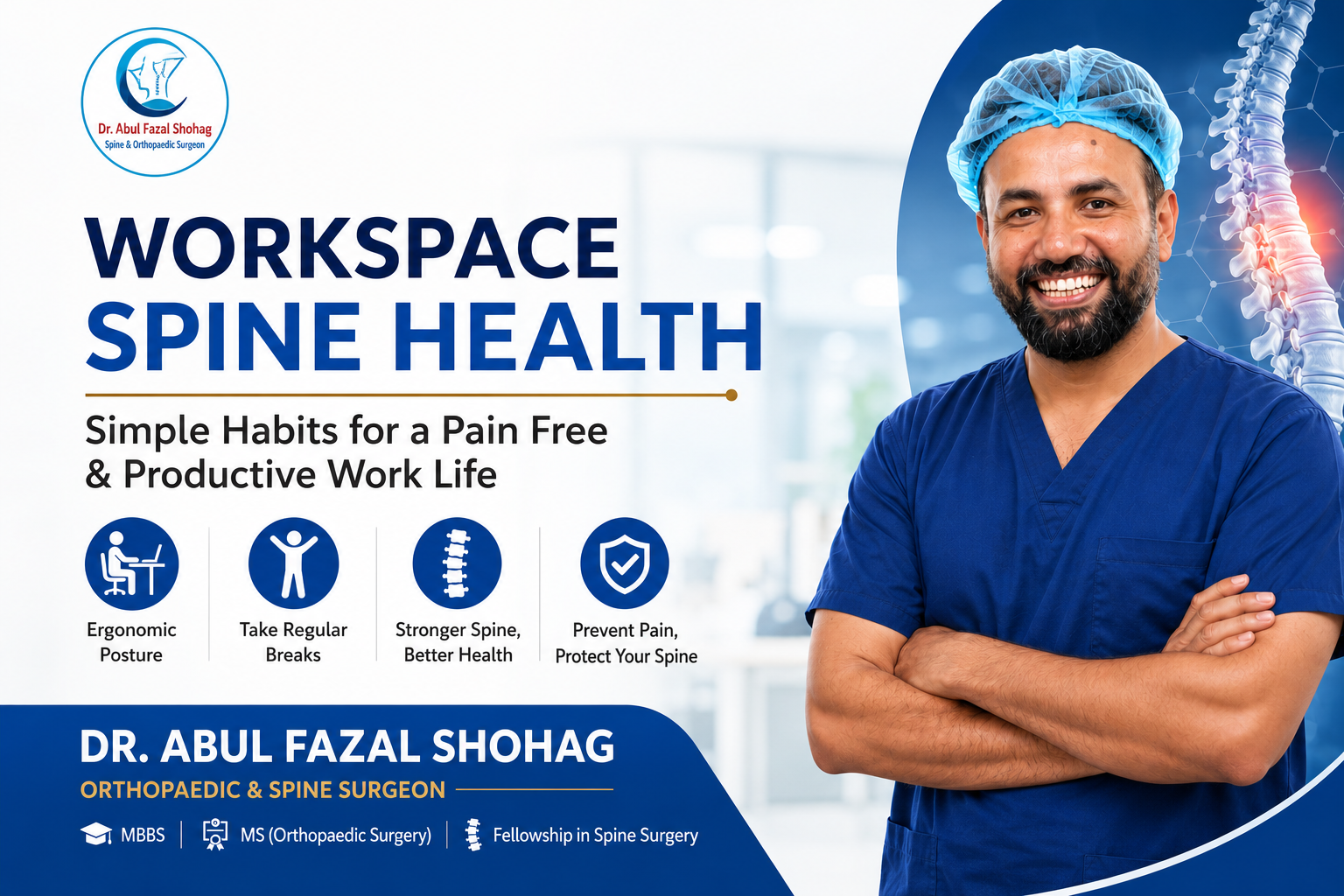
Workspace Spine Health: Prevent Back Pain While Working
Modern lifestyles require many people to spend long hours sitting at a desk or using a computer. Poor posture, prolonged sitting, and an improperly designed workspace can place excessive stress on the spine, leading to neck pain, back pain, and sciatica. Creating an ergonomic workspace and adopting healthy habits can significantly reduce these risks.
Why Workspace Spine Health Matters
Your spine supports your body throughout the day. Sitting in the wrong position for extended periods increases pressure on the spinal discs, muscles, and joints. Over time, this may contribute to chronic neck pain, lower back pain, muscle stiffness, and disc-related problems.
Common Causes of Workplace Back Pain
Poor sitting posture
Long hours without breaks
Incorrect monitor height
Unsupportive chair
Laptop use without external keyboard and mouse
Slouching
Crossing legs for prolonged periods
Lack of regular exercise
Warning Signs
Neck pain
Shoulder pain
Lower back pain
Sciatica
Numbness in the arms or legs
Muscle stiffness
Frequent headaches
Fatigue after work
How to Create an Ergonomic Workspace
Sit with your back fully supported.
Keep both feet flat on the floor.
Maintain your knees at hip level.
Position your monitor at eye level.
Keep elbows at approximately 90 degrees.
Place the keyboard and mouse close to your body.
Avoid bending your neck while using your phone.
Use a headset during long phone calls.
Healthy Habits for Spine Protection
Stand up every 30 to 60 minutes.
Walk for two to five minutes every hour.
Stretch your neck, shoulders, and back regularly.
Strengthen your core muscles.
Maintain a healthy body weight.
Stay physically active.
Sleep on a supportive mattress.
Simple Office Exercises
Neck stretching
Shoulder rolls
Chest stretching
Seated spinal extension
Hamstring stretching
Walking breaks
When Should You See a Spine Specialist?
Consult a spine specialist if you have:
Back pain lasting more than six weeks
Pain radiating into the leg
Persistent neck pain
Numbness or weakness
Difficulty walking
Pain affecting sleep or daily activities
Loss of bladder or bowel control requires immediate emergency medical attention.
How Dr Abul Fazal Shohag Can Help
Dr Abul Fazal Shohag provides comprehensive evaluation and treatment for neck pain, lower back pain, slipped disc, sciatica, and other spinal disorders. Treatment options range from lifestyle modification and physiotherapy to advanced minimally invasive and endoscopic spine surgery when appropriate.
Conclusion
A healthy workspace is essential for maintaining a healthy spine. Small changes in posture, workstation setup, and daily habits can prevent chronic neck and back pain. Early medical evaluation is important if symptoms persist despite ergonomic improvements.