Why Your Back Pain Keeps Coming Back: 10 Common Mistakes to Avoid
Why Your Back Pain Keeps Coming Back: 10 Common Mistakes to Avoid
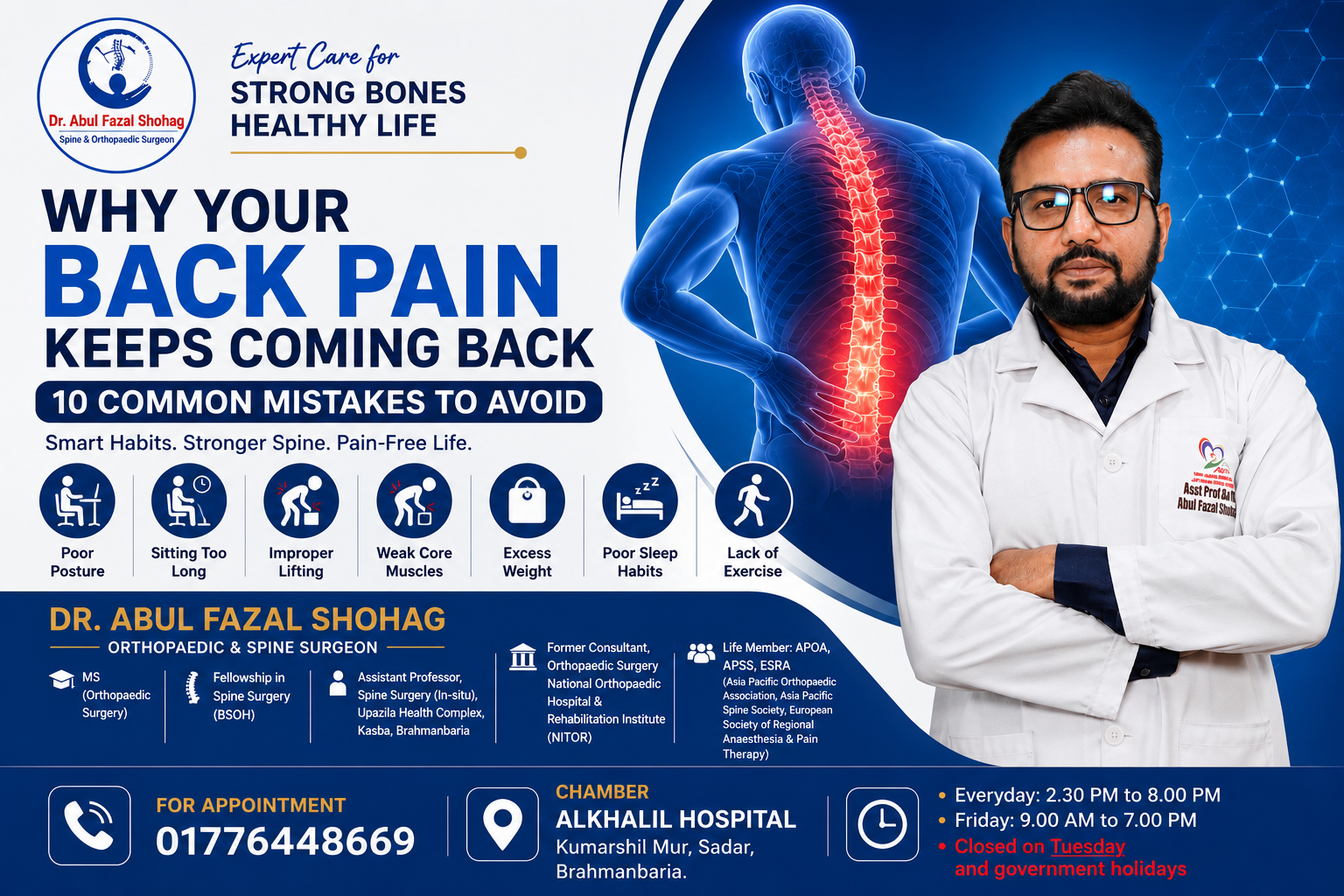
Many people experience temporary relief from back pain only to have it return weeks or months later. Recurrent back pain is often linked to daily habits, poor posture, lack of exercise, and ignoring early warning signs. Understanding these common mistakes can help prevent repeated episodes and protect your spine for years to come.
1. Sitting for Too Long
Prolonged sitting increases pressure on the lumbar discs and weakens the muscles that support your spine. Office workers and drivers are particularly at risk.
Tip: Stand up and walk for a few minutes every 30 to 60 minutes.
2. Poor Posture
Slouching while sitting, standing, or using a mobile phone places unnecessary stress on the spine.
Tip: Keep your shoulders relaxed, your back straight, and your computer screen at eye level.
3. Weak Core Muscles
Your abdominal and back muscles provide essential support for the spine. Weak muscles increase the risk of injury and chronic pain.
Tip: Perform core strengthening exercises regularly under professional guidance.
4. Incorrect Lifting Technique
Lifting heavy objects by bending your back instead of your knees can cause muscle injuries and slipped discs.
Tip: Bend your knees, keep the object close to your body, and avoid twisting while lifting.
5. Lack of Regular Exercise
A sedentary lifestyle leads to weak muscles, reduced flexibility, and increased spinal stiffness.
Recommended activities include:
Walking
Swimming
Cycling
Stretching
Core strengthening exercises
6. Excess Body Weight
Being overweight increases pressure on the lower back and accelerates spinal degeneration.
Maintaining a healthy weight reduces stress on your spine and joints.
7. Ignoring Early Symptoms
Many people continue working despite persistent back pain. Delaying treatment may allow minor problems to become more serious.
Seek medical advice if pain lasts longer than four weeks or is associated with leg pain or numbness.
8. Poor Sleeping Habits
Sleeping on an unsupportive mattress or in poor positions can worsen back pain.
Choose a medium-firm mattress and sleep on your back or side with proper support.
9. Smoking
Smoking reduces blood supply to spinal discs, slowing healing and increasing the risk of degenerative spinal disease.
Stopping smoking benefits both spinal health and overall wellbeing.
10. Self-Medicating Without Proper Diagnosis
Repeatedly taking painkillers without identifying the underlying cause may delay proper treatment.
Persistent back pain should always be evaluated by an experienced spine specialist.
When Should You Consult a Spine Surgeon?
Persistent back pain lasting more than four weeks
Pain radiating into one or both legs
Numbness or tingling
Muscle weakness
Difficulty walking
Pain after trauma
Loss of bladder or bowel control requires immediate emergency medical attention.
How Can a Spine Specialist Help?
A spine specialist will perform a detailed examination and, when necessary, recommend investigations such as X-rays or MRI scans to identify the exact cause of your symptoms. Treatment may include medication, physiotherapy, lifestyle modification, spinal injections, minimally invasive spine surgery, or endoscopic spine surgery depending on the diagnosis.
Why Choose Dr Abul Fazal Shohag?
Dr Abul Fazal Shohag is an Orthopaedic and Spine Surgeon specialising in the treatment of back pain, slipped disc, sciatica, spinal stenosis, osteoporosis, fractures, and other spinal disorders. He provides evidence-based care using modern techniques, including minimally invasive and endoscopic spine surgery, with personalised treatment plans for every patient.
Frequently Asked Questions
Can recurring back pain be prevented?
Yes. Good posture, regular exercise, maintaining a healthy weight, and early treatment significantly reduce the risk of recurrent back pain.
Is rest the best treatment for back pain?
No. Prolonged bed rest is generally not recommended. Gentle movement and guided exercises often promote faster recovery.
When is MRI necessary for back pain?
MRI is recommended when symptoms persist despite treatment, or when there is leg pain, numbness, weakness, or suspected nerve compression.
Conclusion
Back pain often returns because the underlying causes are not addressed. By avoiding common mistakes and adopting healthy spine habits, most people can reduce pain, improve mobility, and prevent future episodes. If your symptoms persist or interfere with your daily life, consult an experienced spine surgeon for expert evaluation and personalised care.