Why Does Low Back Pain Occur? Causes, Symptoms, Treatment & Prevention
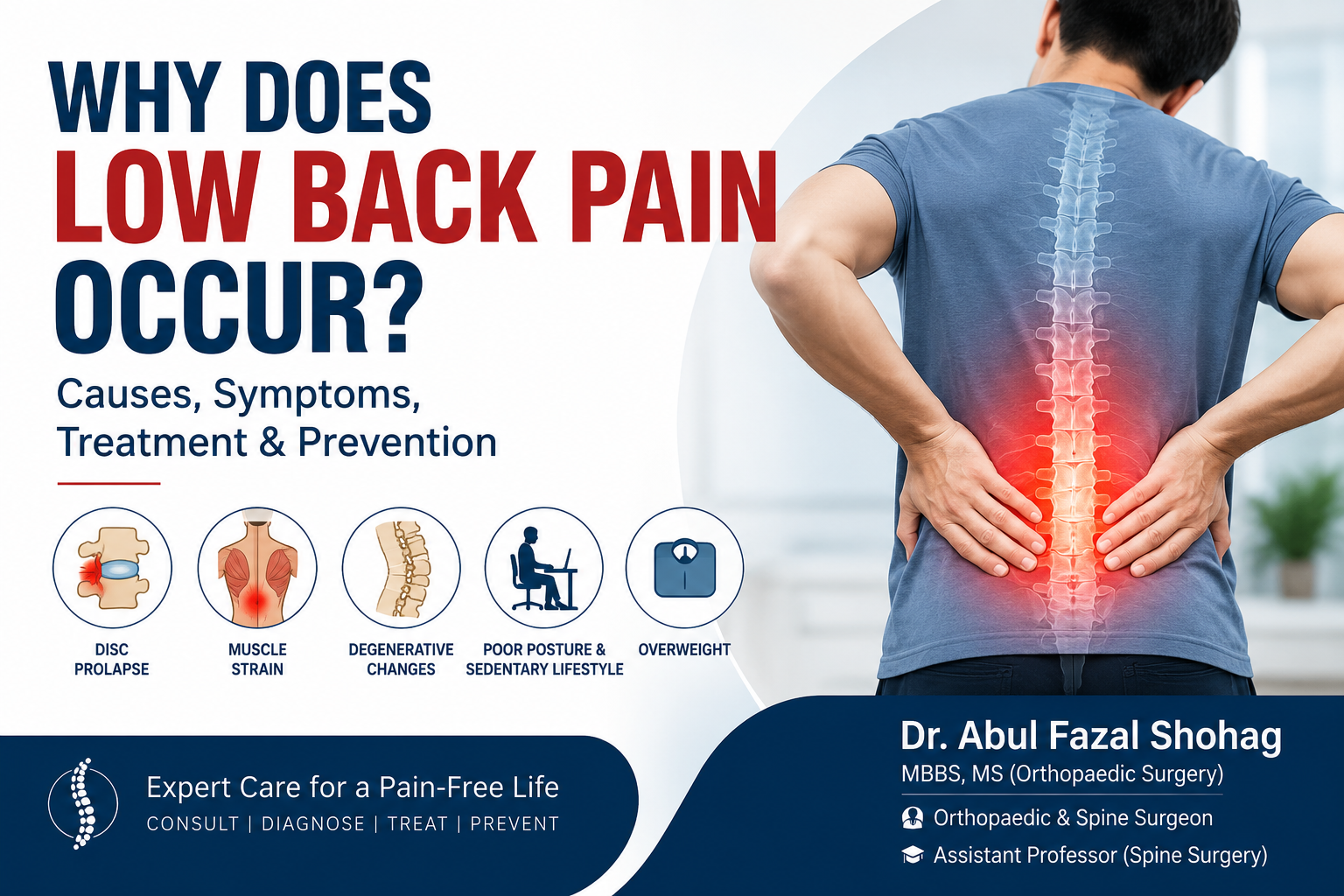
Why Does Low Back Pain Occur? Causes, Symptoms, Treatment & Prevention
By Dr. Abul Fazal Shohag, MBBS, MS (Orthopaedic Surgery)
Orthopaedic & Spine Surgeon
Why Does Low Back Pain Occur?
Low back pain is one of the most common health problems worldwide. According to global studies, nearly 8 out of 10 people experience low back pain at least once in their lifetime. It affects people of all ages, from young office workers to elderly individuals.
In Bangladesh, the number of patients suffering from back pain is increasing rapidly due to prolonged sitting, sedentary lifestyle, obesity, improper posture, and excessive smartphone use.
The good news is that most cases of low back pain can be treated successfully if diagnosed early and managed properly.
---
What Is Low Back Pain?
Low back pain refers to pain or discomfort occurring in the lower part of the spine, usually between the lower ribs and the buttocks. The pain may remain localized or radiate to one or both legs.
It may be:
- Mild or severe
- Sudden or gradual in onset
- Short-term or chronic
- Associated with numbness, tingling, or weakness in the legs
---
Common Causes of Low Back Pain
1. Muscle Strain and Ligament Injury
This is the most common cause of low back pain.
It may occur due to:
- Lifting heavy objects incorrectly
- Sudden twisting movements
- Excessive physical activity
- Prolonged sitting without support
Symptoms include:
- Localized pain
- Muscle stiffness
- Difficulty bending forward
---
2. Lumbar Disc Prolapse (Slip Disc / PLID)
The spinal discs act as cushions between vertebrae. Sometimes the disc bulges or ruptures and compresses nearby nerves.
Symptoms include:
- Severe back pain
- Pain radiating to the leg (Sciatica)
- Numbness or tingling
- Weakness in the foot
Disc prolapse is particularly common among:
- Office workers
- Drivers
- IT professionals
- People who sit for long hours
---
3. Degenerative Disc Disease (Age-Related Wear and Tear)
As we age, the spinal discs lose water content and become less flexible.
This may cause:
- Chronic low back pain
- Morning stiffness
- Pain after prolonged standing
This condition is common after the age of 40 years.
---
4. Poor Posture
Incorrect sitting posture puts excessive pressure on the lower back.
Common examples include:
- Slouching while working
- Sitting with a bent neck while using smartphones
- Long hours in front of computers
Poor posture has become one of the leading causes of back pain among young adults.
---
5. Sedentary Lifestyle and Weak Core Muscles
Weak abdominal and back muscles fail to support the spine properly.
Risk factors include:
- Lack of exercise
- Prolonged sitting
- Obesity
Regular exercise significantly reduces the risk of chronic back pain.
---
6. Osteoarthritis and Spinal Degeneration
Arthritis can affect the joints of the spine, leading to:
- Chronic pain
- Reduced flexibility
- Difficulty walking
This condition commonly affects elderly individuals.
---
7. Osteoporosis and Vertebral Fractures
Weak bones may develop small fractures even after minor trauma.
Symptoms include:
- Sudden severe back pain
- Loss of height
- Stooped posture
Elderly individuals, especially postmenopausal women, are at higher risk.
---
8. Obesity
Excess body weight increases stress on the spine and accelerates disc degeneration.
Maintaining a healthy weight is one of the most effective ways to prevent low back pain.
---
9. Kidney Stones and Other Medical Conditions
Sometimes back pain may not originate from the spine.
Other causes include:
- Kidney stones
- Urinary tract infections
- Certain abdominal conditions
Proper medical evaluation is important to determine the exact cause.
---
Who Is at Higher Risk of Low Back Pain?
You are at higher risk if you:
✔ Sit for long hours
✔ Work at a desk or computer
✔ Are overweight
✔ Smoke
✔ Frequently lift heavy objects
✔ Have poor posture
✔ Lead a sedentary lifestyle
---
Warning Signs: When Should You See a Spine Specialist?
Seek medical attention immediately if you experience:
- Severe pain lasting more than 4–6 weeks
- Pain radiating to the legs
- Numbness or weakness in the legs
- Difficulty walking
- Loss of bladder or bowel control
- Fever or unexplained weight loss with back pain
- History of cancer or major trauma
These symptoms may indicate a serious spinal condition.
---
How Is Low Back Pain Diagnosed?
Diagnosis usually includes:
Medical History
Understanding the duration, severity, and pattern of pain.
Physical Examination
Assessment of posture, movement, nerve function, and muscle strength.
Imaging Studies
Depending on the condition, your doctor may recommend:
- X-ray
- MRI Scan
- CT Scan
- Bone Density Test
---
Treatment of Low Back Pain
Treatment depends on the underlying cause.
Conservative Treatment
Most patients improve without surgery.
Treatment options include:
- Activity modification
- Physiotherapy
- Medications
- Weight reduction
- Posture correction
- Core strengthening exercises
---
Minimally Invasive and Surgical Treatment
Surgery may be required in selected patients, especially if there is:
- Significant nerve compression
- Progressive weakness
- Severe disc prolapse
- Failure of conservative treatment
Modern techniques such as Endoscopic Spine Surgery allow smaller incisions, less pain, and faster recovery.
---
How Can You Prevent Low Back Pain?
Maintain Proper Posture
Sit with your back supported and avoid slouching.
Exercise Regularly
Walking, swimming, and core exercises strengthen spinal muscles.
Avoid Prolonged Sitting
Stand up and stretch every 30–45 minutes.
Maintain a Healthy Weight
Reducing excess weight decreases stress on the spine.
Lift Properly
Bend your knees and keep the object close to your body.
---
Frequently Asked Questions (FAQs)
Can low back pain heal on its own?
Yes. Many cases improve within a few weeks with proper rest and treatment.
Is every disc prolapse patient a candidate for surgery?
No. Most patients improve with conservative management.
Is walking good for low back pain?
Yes. Gentle walking is beneficial in many patients.
Can prolonged sitting cause back pain?
Absolutely. Long hours of sitting are one of the major causes of chronic low back pain.
---
Final Words
Low back pain is extremely common but should never be ignored, especially if associated with leg pain, numbness, or weakness. Early diagnosis and appropriate treatment can prevent chronic disability and improve quality of life.
If you are suffering from persistent back pain, consult a qualified Orthopaedic and Spine Surgeon for proper evaluation and treatment.
---
About the Author
Dr. Abul Fazal Shohag
MBBS, MS (Orthopaedic Surgery)
Orthopaedic & Spine Surgeon
Assistant Professor (Spine Surgery)
Bangladesh Spine & Orthopaedic Hospital Fellowship in Spine Surgery
.