Neck Pain: Causes, Symptoms, Treatment & Prevention
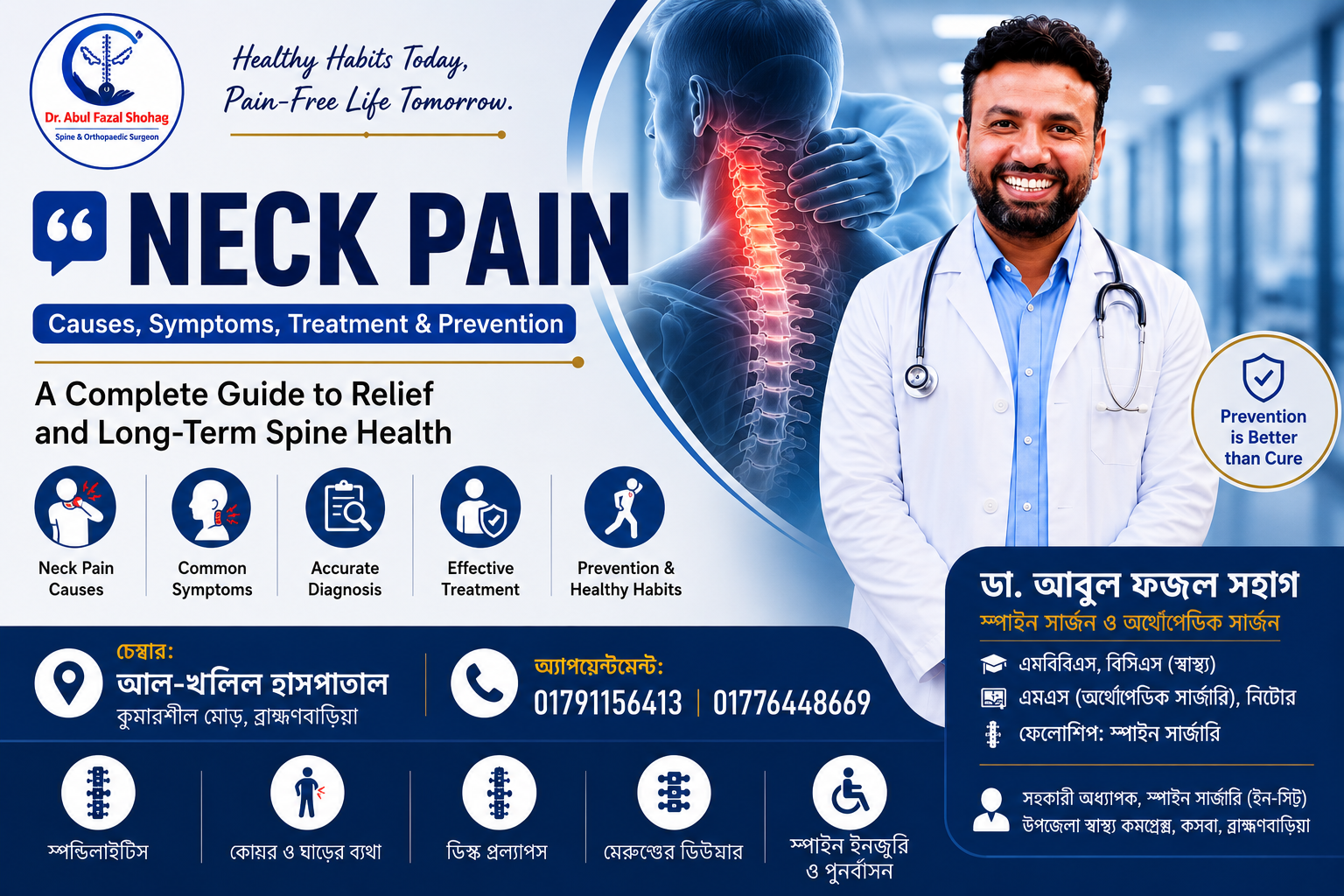
Neck Pain: Causes, Symptoms, Treatment & Prevention
Neck pain is a common health problem that affects millions of people worldwide. It may develop suddenly after an injury or gradually because of poor posture, prolonged computer use, mobile phone overuse, muscle strain, or age-related changes in the cervical spine. While many cases improve with conservative treatment, persistent pain or neurological symptoms require evaluation by a spine specialist.
What Is Neck Pain?
Neck pain refers to discomfort arising from the muscles, ligaments, joints, discs, or nerves of the cervical spine. It may be mild and temporary or severe enough to interfere with daily activities, work, and sleep.
Common Causes of Neck Pain
Poor posture
Prolonged computer use
Excessive mobile phone use
Muscle strain
Cervical disc prolapse (slipped disc)
Cervical spondylosis
Spinal stenosis
Whiplash injury
Sports injuries
Osteoarthritis
Common Symptoms
Neck pain
Neck stiffness
Pain radiating to the shoulder or arm
Numbness in the fingers
Tingling sensation
Weakness in the arm or hand
Headache originating from the neck
Difficulty turning the head
Loss of balance in severe cases
Risk Factors
Sedentary lifestyle
Long working hours
Poor workstation ergonomics
Smoking
Obesity
Previous neck injury
Increasing age
Diagnosis
Medical history
Physical examination
Neurological examination
Digital X-ray
MRI of the cervical spine
CT scan when required
Treatment Options
Non-Surgical Treatment
Rest and activity modification
Pain-relieving medications
Physiotherapy
Posture correction
Neck strengthening exercises
Heat or cold therapy
Lifestyle modification
Surgical Treatment
Surgery may be recommended when severe nerve compression, spinal cord compression, or persistent symptoms fail to improve with conservative treatment.
Anterior Cervical Discectomy and Fusion (ACDF)
Cervical Decompression Surgery
Cervical Disc Surgery
Minimally Invasive Spine Surgery
Selected Endoscopic Spine Surgery procedures
How to Prevent Neck Pain
Maintain good posture
Keep your computer monitor at eye level
Avoid prolonged mobile phone use
Take regular breaks every 30 to 60 minutes
Exercise regularly
Strengthen neck and shoulder muscles
Maintain a healthy body weight
Sleep with a supportive pillow
When Should You See a Spine Surgeon?
Neck pain lasting more than four weeks
Pain radiating into the arm
Persistent numbness or tingling
Weakness of the arm or hand
Difficulty walking
Loss of balance
Loss of bladder or bowel control requires immediate emergency medical attention.
Why Choose Dr Abul Fazal Shohag?
Dr Abul Fazal Shohag is an Orthopaedic and Spine Surgeon experienced in the diagnosis and treatment of neck pain, cervical disc prolapse, cervical spondylosis, spinal stenosis, and other spinal disorders. Treatment plans are individualised using evidence-based approaches, including conservative care, minimally invasive spine surgery, and endoscopic spine surgery when appropriate.
Conclusion
Most cases of neck pain can be successfully managed with early diagnosis, proper treatment, and healthy lifestyle changes. If your symptoms persist or interfere with daily life, consult an experienced spine surgeon for expert evaluation and personalised care.