Cervical Spondylosis: Causes, Symptoms, Treatment & Prevention
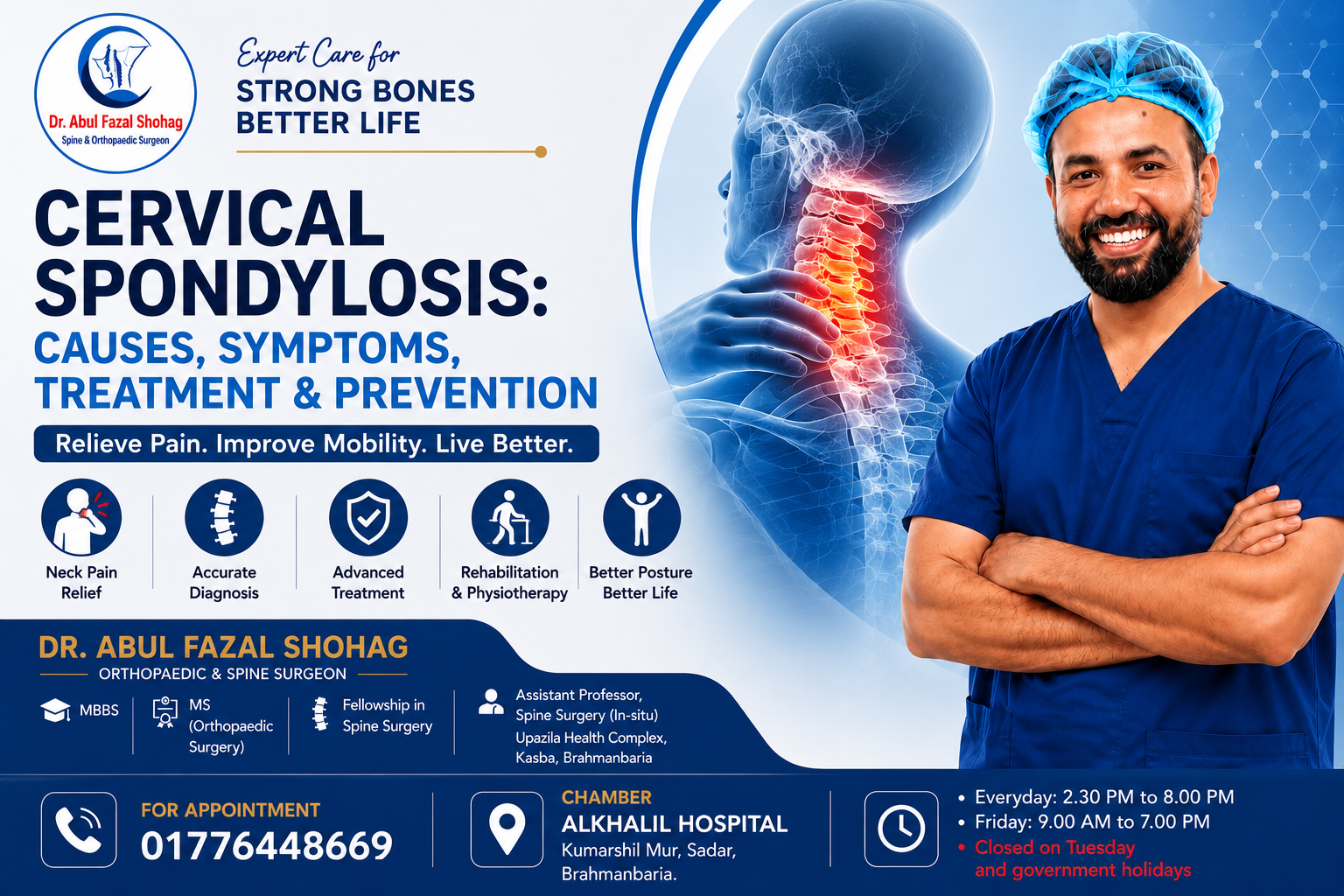
Cervical Spondylosis: Causes, Symptoms, Treatment & Prevention
Neck pain is one of the most common reasons people visit an orthopaedic or spine specialist. One of the leading causes of persistent neck pain is cervical spondylosis, a condition caused by age-related wear and tear of the cervical spine. Although it becomes more common with age, younger adults who spend long hours using computers and mobile phones are also increasingly affected.
With early diagnosis and appropriate treatment, most patients experience significant improvement without surgery.
What Is Cervical Spondylosis?
Cervical spondylosis is a degenerative condition affecting the bones, discs, joints, and ligaments of the neck. As the spinal discs lose water content over time, they become thinner, leading to stiffness, bone spurs, and reduced flexibility.
Common Causes
Natural ageing
Poor posture
Prolonged computer use
Excessive mobile phone use
Previous neck injuries
Repetitive neck movements
Genetic factors
Smoking
Common Symptoms
Persistent neck pain
Neck stiffness
Pain radiating to the shoulders
Pain radiating to the arms
Headache originating from the neck
Numbness or tingling in the hands
Weakness in the arms
Difficulty moving the neck
Loss of balance in advanced cases
Who Is at Risk?
People over 40 years of age
Office workers
Drivers
Teachers
Computer professionals
People with sedentary lifestyles
Individuals with previous neck injuries
Diagnosis
Medical history
Physical examination
Neurological examination
Digital X-ray
MRI of the cervical spine
CT scan when necessary
Treatment Options
Non-Surgical Treatment
Pain-relieving medication
Physiotherapy
Posture correction
Neck strengthening exercises
Lifestyle modification
Heat therapy
Activity modification
Surgical Treatment
Surgery is considered only when there is significant nerve compression, spinal cord compression, progressive weakness, or failure of conservative treatment.
Anterior Cervical Discectomy and Fusion (ACDF)
Cervical decompression surgery
Minimally invasive spine surgery
Selected endoscopic spine surgery procedures
How to Prevent Cervical Spondylosis
Maintain good posture
Adjust your workstation ergonomically
Keep screens at eye level
Avoid prolonged mobile phone use
Take regular stretching breaks
Exercise regularly
Maintain a healthy weight
Sleep with a supportive pillow
Quit smoking
When Should You Consult a Spine Surgeon?
Persistent neck pain lasting more than four weeks
Pain radiating to the arm
Persistent numbness
Weakness of the hand or arm
Difficulty walking
Problems with balance
Loss of bladder or bowel control requires immediate emergency medical attention.
Why Choose Dr Abul Fazal Shohag?
Dr Abul Fazal Shohag is an Orthopaedic and Spine Surgeon experienced in the diagnosis and treatment of cervical spondylosis, cervical disc prolapse, spinal stenosis, and other neck disorders. He provides evidence-based treatment using conservative care, minimally invasive spine surgery, and endoscopic spine surgery where appropriate.
Conclusion
Cervical spondylosis is a common condition that can usually be managed successfully with early diagnosis, lifestyle changes, physiotherapy, and appropriate medical care. If neck pain is affecting your daily life, consult an experienced spine surgeon for expert evaluation and personalised treatment.