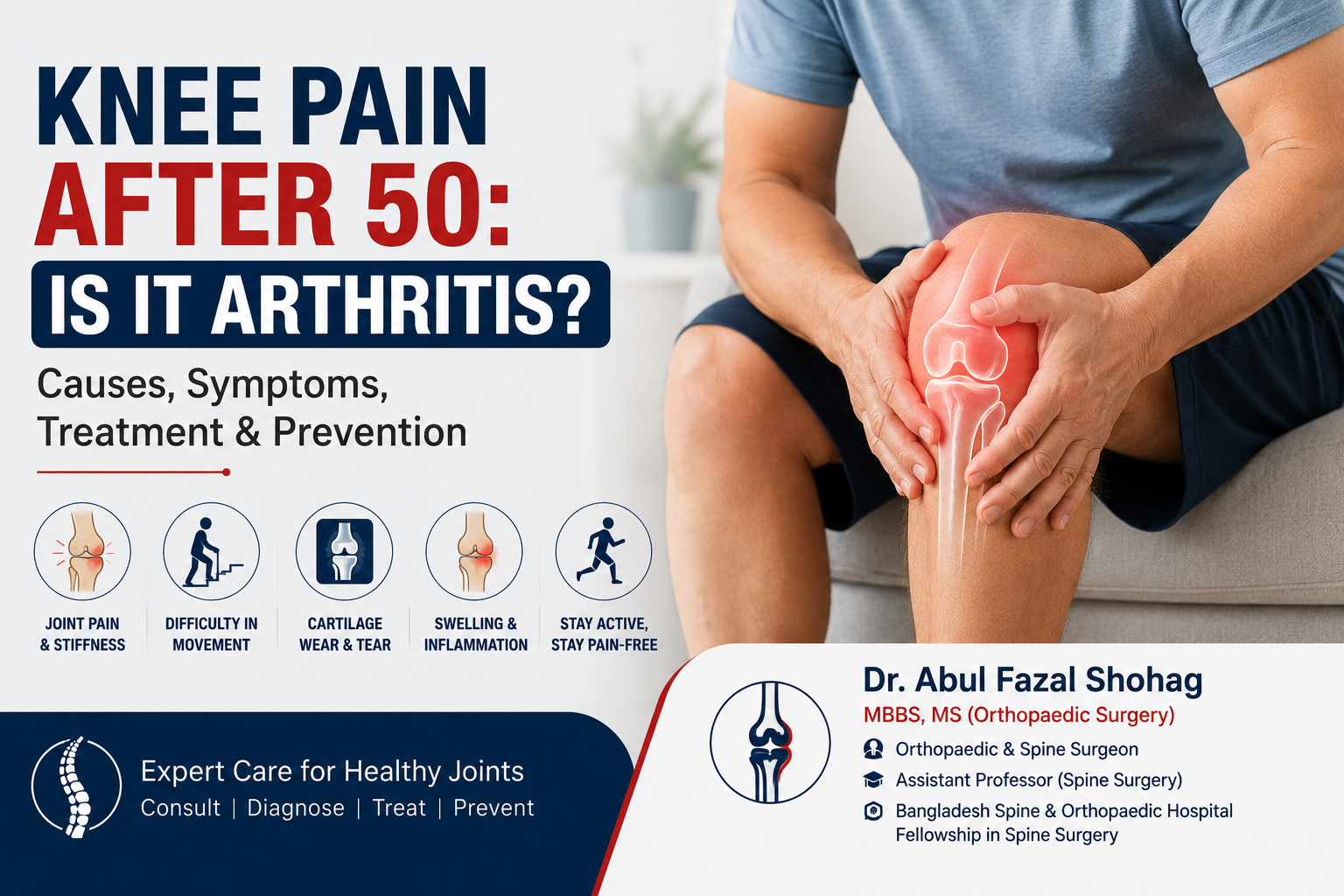
Knee Pain After 50: Is It Arthritis? Causes, Symptoms, Treatment & Prevention
# Knee Pain After 50: Is It Arthritis? Causes, Symptoms, Treatment & Prevention
**By Dr. Abul Fazal Shohag, MBBS, MS (Orthopaedic Surgery)**
**Orthopaedic & Spine Surgeon**
---
## Knee Pain After 50: Is It Arthritis?
Knee pain is one of the most common reasons people over the age of 50 visit an Orthopaedic Surgeon. Many people believe that knee pain is simply a normal part of ageing. However, persistent knee pain should never be ignored because it may be a sign of **knee osteoarthritis**, one of the leading causes of pain and disability worldwide.
The good news is that not every patient with knee arthritis needs surgery. Early diagnosis and appropriate treatment can reduce pain, improve mobility, and help you maintain an active lifestyle.
---
# What Is Knee Osteoarthritis?
Knee osteoarthritis is a condition in which the protective cartilage covering the ends of the bones gradually wears away. As the cartilage becomes thinner, the bones begin to rub against each other, leading to pain, stiffness, swelling, and reduced movement.
It usually develops gradually over many years and becomes more common after the age of 50.
---
# Why Does Knee Arthritis Occur?
Several factors increase the risk of developing knee osteoarthritis.
## 1. Age
As we grow older, the cartilage naturally becomes thinner and loses its ability to absorb shock.
---
## 2. Excess Body Weight
Being overweight places extra pressure on the knee joints, accelerating cartilage damage.
Even a modest weight reduction can significantly reduce knee pain.
---
## 3. Previous Knee Injury
Old fractures, ligament injuries, or meniscus tears can increase the risk of arthritis later in life.
---
## 4. Family History
Genetics plays a role. If close family members have osteoarthritis, your risk may be higher.
---
## 5. Repetitive Stress
People whose jobs require frequent squatting, kneeling, climbing stairs, or lifting heavy loads are more likely to develop knee arthritis.
---
## 6. Weak Muscles
Weak thigh muscles reduce knee stability and increase joint stress.
---
# Common Symptoms of Knee Arthritis
Patients may experience:
- Pain while walking
- Pain when climbing or descending stairs
- Morning stiffness lasting less than 30 minutes
- Swelling around the knee
- Grinding or cracking sounds (crepitus)
- Difficulty standing after sitting for a long time
- Reduced ability to walk long distances
- Knee deformity in advanced stages
Symptoms usually worsen gradually over time.
---
# Is Every Knee Pain Arthritis?
No.
Many conditions can cause knee pain, including:
- Meniscus injury
- Ligament injury (ACL, PCL)
- Tendinitis
- Bursitis
- Rheumatoid arthritis
- Gout
- Infection
A proper evaluation by an Orthopaedic Surgeon is necessary to determine the exact cause.
---
# How Is Knee Arthritis Diagnosed?
Diagnosis is based on:
## Medical History
Your doctor will ask about:
- Duration of pain
- Walking ability
- Previous injuries
- Daily activities
---
## Physical Examination
The knee is examined for:
- Swelling
- Tenderness
- Range of motion
- Alignment
- Stability
---
## Investigations
Your doctor may recommend:
- X-ray of the knee
- MRI (when necessary)
- Blood tests if inflammatory arthritis is suspected
---
# Treatment of Knee Arthritis
Treatment depends on the severity of arthritis.
---
## Lifestyle Modification
Small lifestyle changes often provide significant relief.
These include:
- Weight reduction
- Regular walking
- Avoiding prolonged squatting
- Using supportive footwear
---
## Physiotherapy
Physiotherapy helps by:
- Strengthening thigh muscles
- Improving flexibility
- Reducing pain
- Improving balance
---
## Medications
Depending on your condition, your doctor may prescribe:
- Pain relievers
- Anti-inflammatory medications
- Topical gels
Always take medications under medical supervision.
---
## Knee Injections
Some patients may benefit from joint injections when appropriate. Your Orthopaedic Surgeon will determine whether this option is suitable for you.
---
## Knee Replacement Surgery
When pain becomes severe and affects daily life despite appropriate non-surgical treatment, Total Knee Replacement (TKR) may be recommended.
Modern knee replacement surgery can:
- Relieve pain
- Improve walking ability
- Restore quality of life
Most patients experience excellent outcomes after rehabilitation.
---
# Can Knee Arthritis Be Prevented?
Although ageing cannot be prevented, you can reduce your risk by:
- Maintaining a healthy weight
- Exercising regularly
- Strengthening thigh muscles
- Avoiding unnecessary stress on the knees
- Treating knee injuries promptly
- Wearing appropriate footwear
---
# When Should You See an Orthopaedic Surgeon?
Consult a specialist if you have:
- Knee pain lasting more than two weeks
- Swelling that does not improve
- Difficulty walking
- Knee locking or giving way
- Pain that interferes with sleep
- Difficulty climbing stairs
- Significant reduction in daily activities
Early treatment often produces better outcomes.
---
# Frequently Asked Questions (FAQs)
### Is knee pain after 50 always due to arthritis?
No. Knee pain may result from ligament injuries, meniscus tears, tendon problems, inflammatory arthritis, or other conditions. A proper medical evaluation is important.
---
### Can knee arthritis be cured?
There is currently no cure that reverses osteoarthritis, but many treatments can effectively reduce pain, improve function, and slow progression.
---
### Is walking good for knee arthritis?
Yes. Gentle, regular walking is generally beneficial for many people with knee osteoarthritis, provided it does not significantly worsen symptoms.
---
### When is knee replacement surgery necessary?
Knee replacement is usually considered when severe arthritis causes persistent pain and disability despite appropriate non-surgical treatment.
---
# Final Thoughts
Knee pain after the age of 50 should not be considered a normal part of ageing. Early diagnosis and appropriate treatment can help you remain active, independent, and pain-free.
If you have persistent knee pain, swelling, or difficulty walking, consult an Orthopaedic Surgeon for a proper assessment and personalized treatment plan.
---
# About the Author
**Dr. Abul Fazal Shohag, MBBS, MS (Orthopaedic Surgery)**
**Orthopaedic & Spine Surgeon**
**Assistant Professor (Spine Surgery)**
Dr. Abul Fazal Shohag specializes in spine disorders, orthopaedic trauma, joint replacement, sports injuries, and minimally invasive spine surgery. He is committed to providing evidence-based, patient-centered care and educating the public about bone and joint health.