Is Sciatica Causing Your Leg Pain? Symptoms, Causes, Treatment & Prevention
Is Sciatica Causing Your Leg Pain?
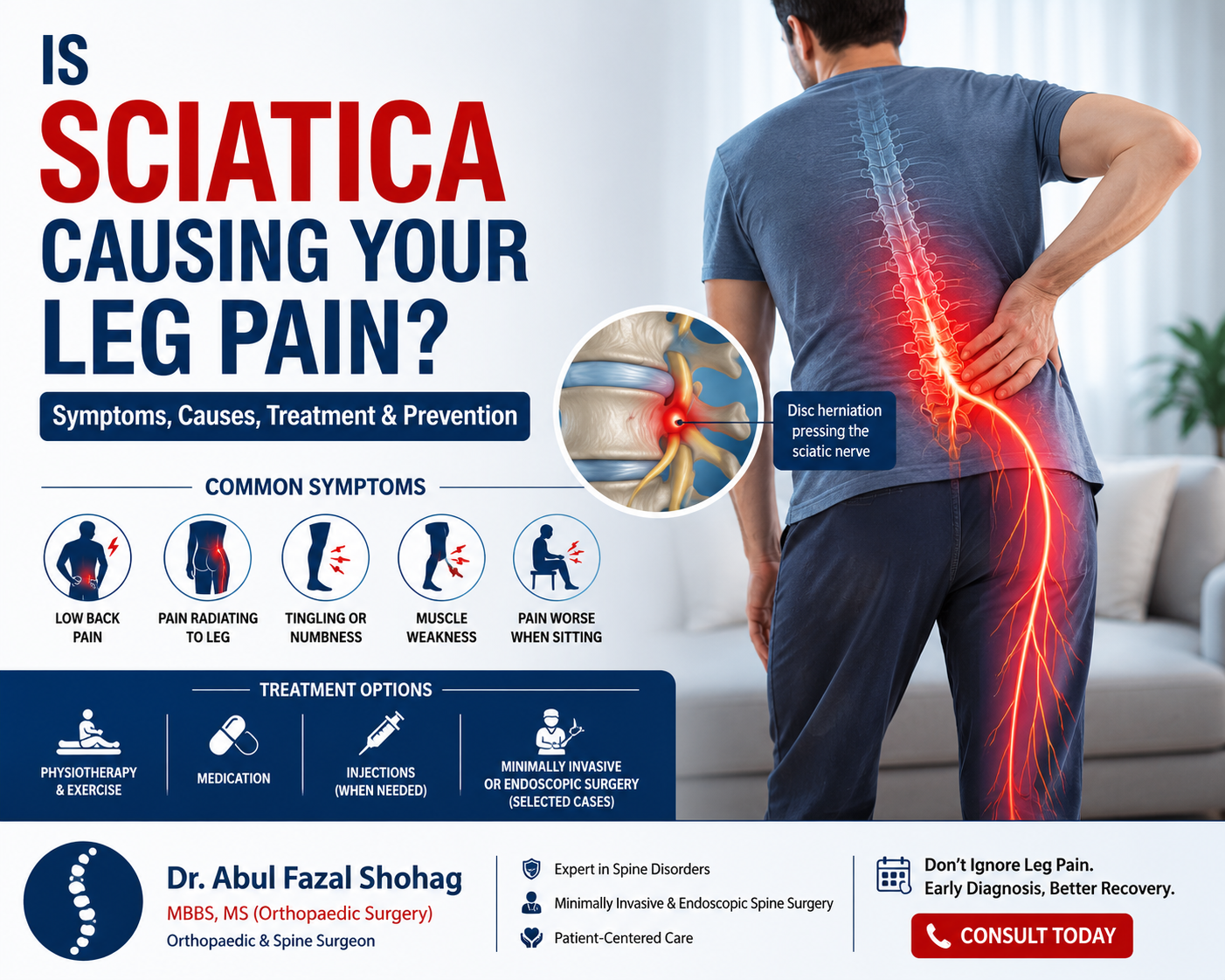
Many people think pain in the leg is caused by muscle problems. However, pain that starts in the lower back and travels down the buttock, thigh, calf, or even into the foot is often caused by sciatica.
Sciatica is not a disease itself. It is a symptom caused by irritation or compression of the sciatic nerve, the longest nerve in the human body.
Fortunately, most patients improve with proper diagnosis and treatment, and only a small percentage require surgery.
What Is Sciatica?
The sciatic nerve starts from the lower part of the spine and travels through the buttocks to the legs.
When this nerve becomes compressed or irritated, patients develop pain known as sciatica.
The pain may affect one leg or, less commonly, both legs.
Common Causes of Sciatica
1. Lumbar Disc Prolapse (PLID)
The most common cause.
A slipped or herniated disc presses on the nerve root.
2. Lumbar Spinal Stenosis
Narrowing of the spinal canal compresses the nerves.
This is common in older adults.
3. Degenerative Disc Disease
Age-related wear and tear may narrow the spaces around the nerves.
4. Spondylolisthesis
One vertebra slips over another, compressing nearby nerves.
5. Spinal Injury
Fractures or trauma can injure the sciatic nerve.
6. Rare Causes
Spinal tumors
Spinal infections
Piriformis syndrome
Symptoms of Sciatica
Patients may experience:
Sharp pain from the lower back to the leg
Burning sensation
Electric shock-like pain
Tingling
Numbness
Muscle weakness
Difficulty walking
Pain that worsens while sitting
Usually only one leg is affected.
Who Is at Risk?
You are more likely to develop sciatica if you:
Sit for long hours
Lift heavy objects
Are overweight
Smoke
Have poor posture
Drive for long periods
Have diabetes
How Is Sciatica Diagnosed?
Your doctor will perform:
Medical History
Understanding the pattern of pain.
Physical Examination
Testing muscle strength, sensation, reflexes, and nerve function.
Imaging
If necessary:
X-ray
MRI
CT scan
MRI is particularly useful when a disc prolapse is suspected.
Treatment
Treatment depends on the underlying cause.
Conservative Treatment
Most patients recover without surgery.
Treatment may include:
Short period of activity modification
Physiotherapy
Pain medication
Core strengthening exercises
Weight management
Surgery
Surgery may be recommended when patients have:
Severe weakness
Progressive nerve damage
Persistent severe pain despite appropriate treatment
Loss of bladder or bowel control (a medical emergency)
Modern minimally invasive and endoscopic spine surgery can relieve nerve compression while reducing recovery time in selected patients.
Can Sciatica Be Prevented?
You can reduce your risk by:
Maintaining a healthy weight
Exercising regularly
Strengthening core muscles
Avoiding prolonged sitting
Lifting correctly
Maintaining good posture
When Should You See a Spine Surgeon?
Seek medical attention if:
Leg pain lasts more than a few weeks
Pain is severe
There is numbness or weakness
Walking becomes difficult
You lose bladder or bowel control
Early diagnosis often leads to better outcomes.
Frequently Asked Questions
Is sciatica permanent?
No. Most patients recover with appropriate treatment.
Does every patient with sciatica need surgery?
No. Most improve without surgery.
Is walking good for sciatica?
Gentle walking is beneficial for many patients, provided it does not significantly worsen symptoms.
Can sciatica return?
Yes. Maintaining a healthy lifestyle and proper posture can help reduce the risk of recurrence.
Final Thoughts
Sciatica is one of the most common causes of leg pain, but it is also one of the most treatable spine conditions. Early diagnosis and appropriate management can relieve pain, restore mobility, and improve quality of life.
If you have pain that radiates from your back into your leg, consult an Orthopaedic & Spine Surgeon for a proper evaluation.