Fractures & Trauma: First Aid, Treatment and Recovery Guide
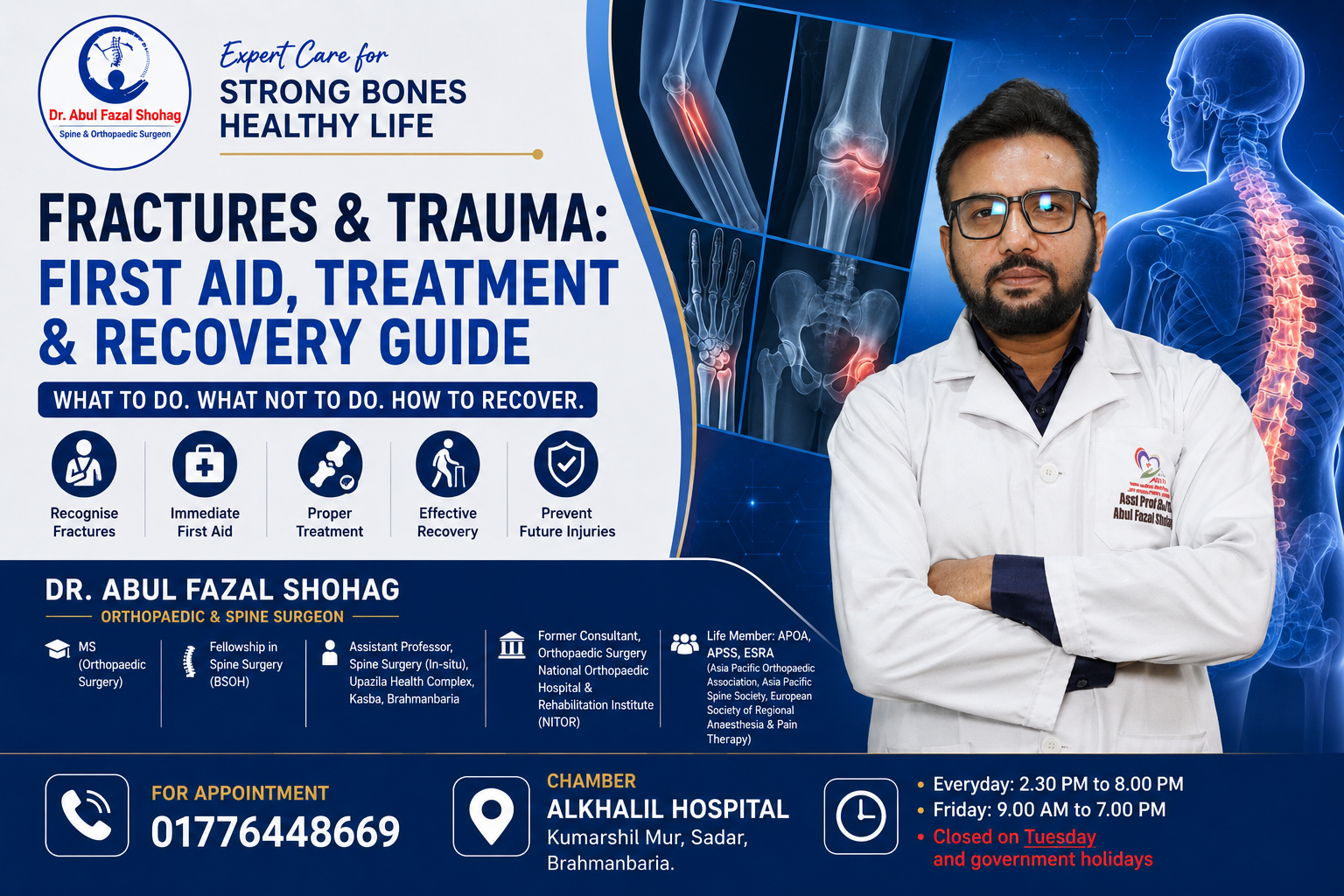
Fractures & Trauma: First Aid, Treatment and Recovery Guide
Bone fractures are among the most common injuries seen in emergency departments. They can occur after road traffic accidents, falls, sports injuries, workplace accidents, or direct trauma. Proper first aid before reaching the hospital can reduce pain, prevent further damage, and improve recovery.
Knowing what to do—and what not to do—can make a significant difference in the outcome of a fracture.
What Is a Fracture?
A fracture is a break or crack in a bone. The injury may range from a small crack to a complete break with displacement of the bone. Some fractures remain closed beneath the skin, while others are open fractures where the bone communicates with the outside through a wound.
Common Causes of Fractures
Road traffic accidents
Falls
Sports injuries
Workplace injuries
Osteoporosis
Direct impact injuries
Violence
Common Signs and Symptoms
Severe pain
Swelling
Bruising
Visible deformity
Difficulty moving the injured limb
Inability to bear weight
Abnormal movement
Open wound with exposed bone in severe cases
Primary First Aid for a Fracture
Stay calm and reassure the injured person.
Do not move the injured limb unnecessarily.
Immobilise the injured area using a splint or any firm support.
Apply an ice pack wrapped in a cloth for 15 to 20 minutes to reduce swelling.
If there is bleeding, apply gentle pressure using a clean cloth unless bone is protruding through the wound.
Seek immediate medical attention.
If an open fracture is present, cover the wound with a clean dressing and avoid touching the exposed bone.
What Should You Never Do?
Do not try to straighten the broken bone.
Do not massage the injured area.
Do not allow the patient to walk on an injured leg.
Do not give food or drinks if emergency surgery may be required.
Do not ignore severe pain or deformity.
Diagnosis
Medical history
Physical examination
Digital X-ray
CT scan when necessary
MRI for selected injuries
Treatment Options
Cast immobilisation
Splinting
Closed reduction
Open Reduction and Internal Fixation (ORIF)
Intramedullary nailing
External fixation
Rehabilitation and physiotherapy
Recovery After a Fracture
Recovery depends on the type of fracture, the patient's age, general health, and treatment method. Following your doctor's instructions, attending follow-up appointments, and participating in physiotherapy are essential for optimal healing.
How Can Fractures Be Prevented?
Wear seat belts while driving.
Use protective sports equipment.
Maintain strong bones through calcium and vitamin D.
Exercise regularly.
Prevent falls at home, especially in older adults.
Treat osteoporosis early.
When Should You Visit an Orthopaedic Surgeon?
Severe pain after an injury
Visible deformity
Inability to move the limb
Persistent swelling
Open fractures
Numbness or loss of circulation
Pain that worsens over time
Why Choose Dr Abul Fazal Shohag?
Dr Abul Fazal Shohag is an Orthopaedic and Spine Surgeon experienced in trauma surgery, fracture management, joint reconstruction, and spine surgery. He provides evidence-based treatment using modern surgical techniques to help patients recover safely and return to their normal activities.
Conclusion
Proper first aid, early diagnosis, and appropriate treatment are the keys to successful fracture healing. If you suspect a fracture after an injury, seek immediate medical attention instead of attempting treatment at home.