Fracture Recovery: Healing Time, Rehabilitation & Tips for Faster Bone Healing
Fracture Recovery: Healing Time, Rehabilitation & Tips for Faster Bone Healing
A bone fracture is one of the most common orthopaedic injuries. While modern treatment techniques allow most fractures to heal successfully, recovery depends on proper medical care, rehabilitation, nutrition, and patient compliance.
Understanding the healing process can help patients recover faster and reduce the risk of long-term complications.
How Do Fractures Heal?
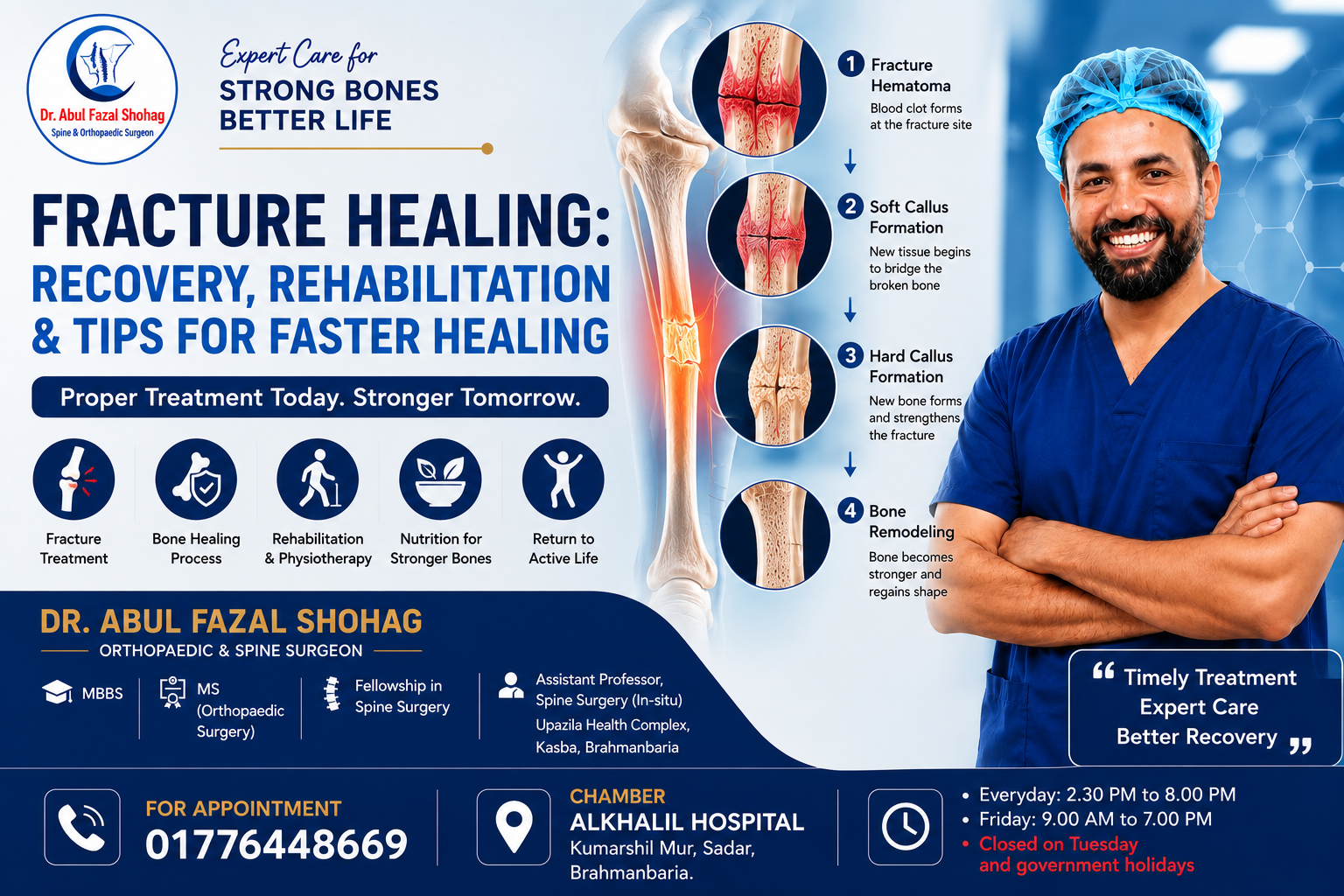
Bone healing occurs in several stages. Immediately after a fracture, the body forms a blood clot around the broken bone. Over the following weeks, new bone tissue develops, gradually connecting the fractured ends. Finally, the bone remodels and regains strength over several months.
How Long Does a Fracture Take to Heal?
Healing time varies depending on several factors.
Finger fractures: 3–6 weeks
Wrist fractures: 6–8 weeks
Forearm fractures: 8–12 weeks
Clavicle fractures: 6–12 weeks
Ankle fractures: 6–12 weeks
Hip fractures: Usually require surgery followed by rehabilitation
Complete recovery may take longer depending on the patient's age, health, and injury severity.
Factors That Affect Bone Healing
Age
Smoking
Diabetes
Nutrition
Osteoporosis
Severity of the fracture
Blood supply to the bone
Proper fracture fixation
Following medical advice
Treatment Options
Plaster cast
Splint
Brace
Closed reduction
Open Reduction and Internal Fixation (ORIF)
Intramedullary nailing
External fixation
Rehabilitation after surgery
Importance of Physiotherapy
Physiotherapy helps restore joint movement, muscle strength, flexibility, balance, and walking ability. Starting rehabilitation at the appropriate time reduces stiffness and improves long-term function.
Nutrition for Bone Healing
Eat foods rich in calcium.
Maintain adequate vitamin D levels.
Consume sufficient protein.
Include fruits and vegetables in your daily diet.
Drink enough water.
Avoid smoking and excessive alcohol.
When Should You Return to Daily Activities?
Return to work, sports, and driving should only be done after your orthopaedic surgeon confirms adequate healing. Returning too early may delay recovery or cause another fracture.
Warning Signs During Recovery
Increasing pain
Persistent swelling
Redness or wound discharge
Fever
Numbness
Difficulty moving fingers or toes
Loose cast
These symptoms require prompt medical review.
How to Prevent Future Fractures
Exercise regularly
Improve balance
Wear appropriate footwear
Treat osteoporosis
Use protective equipment during sports
Follow workplace safety measures
Maintain healthy bone strength
Why Choose Dr Abul Fazal Shohag?
Dr Abul Fazal Shohag is an Orthopaedic and Spine Surgeon experienced in fracture management, trauma surgery, sports injuries, osteoporosis, and complex orthopaedic care. Using evidence-based treatment and personalised rehabilitation plans, he helps patients achieve faster recovery and return to an active lifestyle.
Conclusion
Successful fracture recovery depends on proper treatment, patience, physiotherapy, and healthy lifestyle choices. Early diagnosis, expert care, and regular follow-up can significantly improve healing and reduce complications. If you have suffered a fracture, consult an experienced orthopaedic surgeon for the most appropriate treatment plan.