Endoscopic Spine Surgery Recovery: Week-by-Week Guide After Surgery
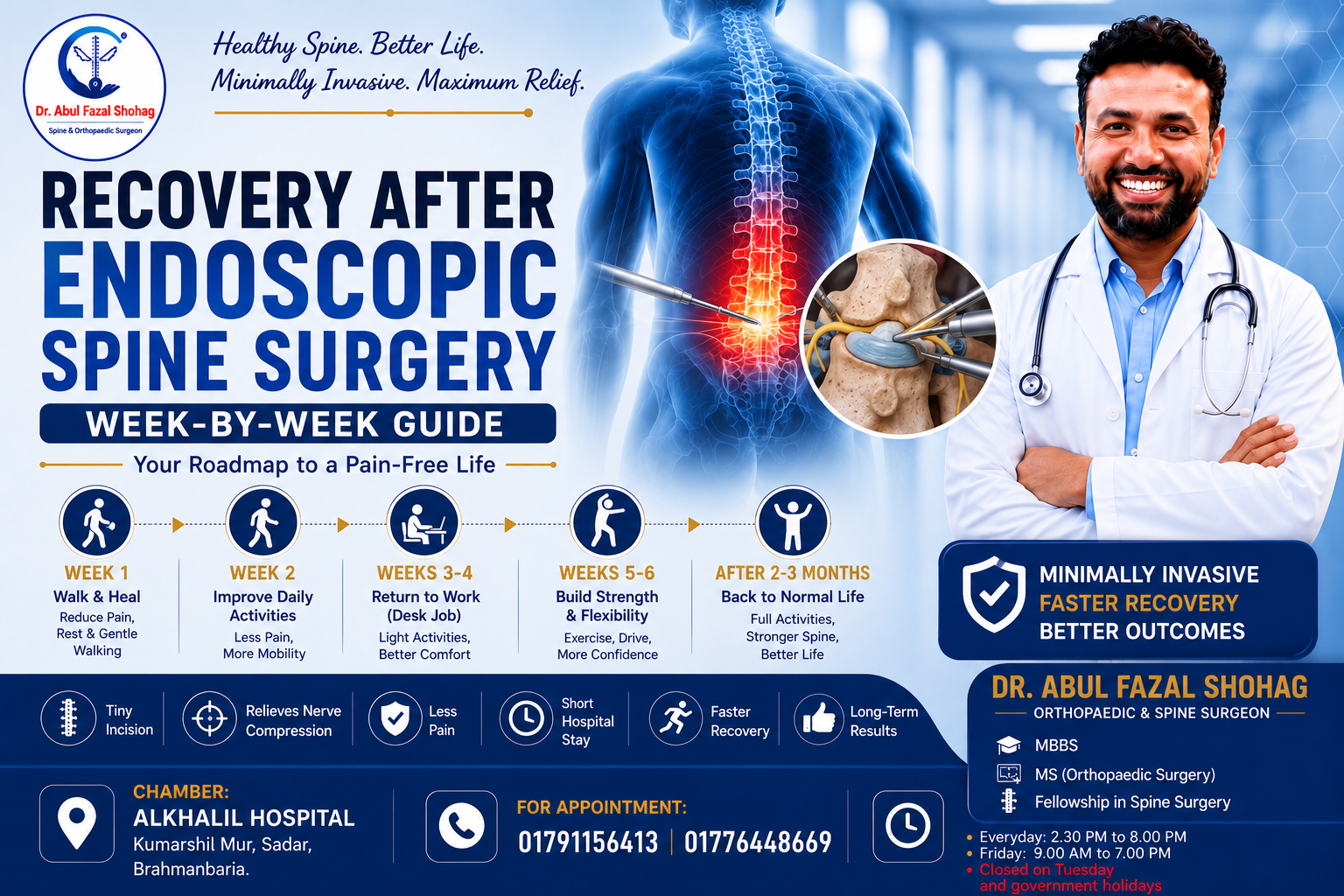
# Endoscopic Spine Surgery Recovery: Week-by-Week Guide After Surgery
One of the biggest concerns patients have before undergoing spine surgery is, "How long will it take me to recover?"
Thanks to modern minimally invasive techniques, Endoscopic Spine Surgery offers a much faster recovery than conventional open spine surgery. Because the procedure uses a tiny incision and causes minimal damage to muscles and surrounding tissues, patients usually experience less pain, shorter hospital stays, and an earlier return to normal activities.
However, recovery is a gradual process. Understanding what to expect each week can help you recover safely and confidently.
## What Is Endoscopic Spine Surgery?
Endoscopic Spine Surgery is an advanced minimally invasive procedure used to treat conditions such as slipped discs (PLID), sciatica, lumbar spinal stenosis, and certain cervical spine disorders.
Using a high-definition camera and specialised instruments, the surgeon removes the pressure on the affected nerve through an incision that is usually less than one centimetre.
## Immediately After Surgery
Most patients are surprised by how quickly they recover.
Within a few hours after surgery, many patients can:
• Stand with assistance
• Walk short distances
• Eat and drink normally
• Use the bathroom independently
• Notice significant improvement in leg pain
Some mild discomfort around the incision is normal and usually improves over the next few days.
## Week 1: The First Seven Days
During the first week, your focus should be on healing.
What you can expect:
• Mild soreness around the incision
• Gradual reduction in leg pain
• Walking several times each day
• Sleeping more comfortably
• Minimal wound care
Avoid:
• Heavy lifting
• Bending repeatedly
• Twisting your back
• Sitting continuously for long periods
Walking is one of the best exercises during this stage.
## Week 2
Most patients feel noticeably better.
By the second week:
• Walking becomes easier
• Pain continues to decrease
• Daily activities become more comfortable
• Many patients reduce their pain medication
Continue following your surgeon's instructions regarding activity restrictions.
## Weeks 3–4
Recovery progresses rapidly.
During this period:
• Office workers may return to work
• Light household activities become easier
• Walking distance increases
• Flexibility gradually improves
Your surgeon may recommend starting physiotherapy if appropriate.
## Weeks 5–6
Most patients regain much of their normal routine.
You may be able to:
• Drive comfortably
• Return to desk-based work full time
• Perform light exercise
• Walk longer distances
• Resume social activities
Heavy lifting should still be avoided unless approved by your surgeon.
## After Two to Three Months
By this stage, many patients have recovered remarkably well.
Most can:
• Return to regular work
• Exercise more actively
• Travel comfortably
• Enjoy sports approved by their surgeon
• Live without the severe leg pain they experienced before surgery
Recovery speed varies depending on age, fitness level, medical conditions, and the severity of the spinal problem.
## How to Speed Up Recovery
A successful recovery depends on both the surgery and your commitment afterwards.
Helpful tips include:
• Walk every day
• Follow your physiotherapy programme
• Maintain good posture
• Strengthen your core muscles
• Eat a healthy, protein-rich diet
• Stay hydrated
• Maintain a healthy body weight
• Get adequate sleep
• Stop smoking
## Activities to Avoid During Recovery
To protect your healing spine, avoid:
• Lifting heavy objects
• Sudden twisting movements
• High-impact sports
• Sitting for prolonged periods
• Ignoring postoperative instructions
Following your surgeon's advice greatly reduces the risk of recurrent disc problems.
## Warning Signs After Surgery
Contact your surgeon immediately if you develop:
• Fever
• Increasing wound redness
• Persistent wound discharge
• Severe back pain
• Increasing leg weakness
• Difficulty passing urine
• Loss of bowel control
These symptoms require prompt medical assessment.
## Is Physiotherapy Necessary?
Physiotherapy plays an important role in recovery.
A structured rehabilitation programme helps:
• Improve flexibility
• Restore muscle strength
• Reduce stiffness
• Improve posture
• Lower the risk of recurrence
Your physiotherapist will gradually increase your activity level according to your progress.
## Why Choose Dr Abul Fazal Shohag?
Dr Abul Fazal Shohag is an Orthopaedic and Spine Surgeon with Fellowship training in Spine Surgery. He specialises in minimally invasive and endoscopic spine procedures for slipped discs, sciatica, spinal stenosis, and other spinal disorders. Every patient receives a personalised treatment and rehabilitation plan to ensure the safest recovery and the best possible long-term outcome.
## Conclusion
Endoscopic Spine Surgery has transformed the treatment of many spinal conditions by allowing patients to recover faster with less pain and smaller scars. Although recovery is generally quicker than with conventional surgery, following your surgeon's instructions, staying active, and participating in rehabilitation are essential for achieving the best results.
If you have persistent back pain, leg pain, or numbness that has not improved with conservative treatment, consult a qualified spine surgeon to find out whether Endoscopic Spine Surgery is the right option for you.
## Frequently Asked Questions
### Q1. How soon can I walk after Endoscopic Spine Surgery?
Most patients begin walking within a few hours after surgery under medical supervision.
### Q2. When can I return to work?
Many office workers return within two to four weeks, while physically demanding jobs may require a longer recovery period.
### Q3. When can I drive after surgery?
Driving is usually possible after two to four weeks, provided you are comfortable, no longer taking strong pain medication, and have your surgeon's approval.
### Q4. Will I need physiotherapy?
Yes. Physiotherapy helps improve flexibility, muscle strength, posture, and long-term spinal health. Your surgeon will advise when to begin.
### Q5. Can a slipped disc come back after Endoscopic Spine Surgery?
Although recurrence is uncommon, it can happen. Maintaining a healthy weight, strengthening your core muscles, exercising regularly, and following your surgeon's advice can reduce the risk.