Can Endoscopic Spine Surgery Treat Sciatica? Everything You Need to Know
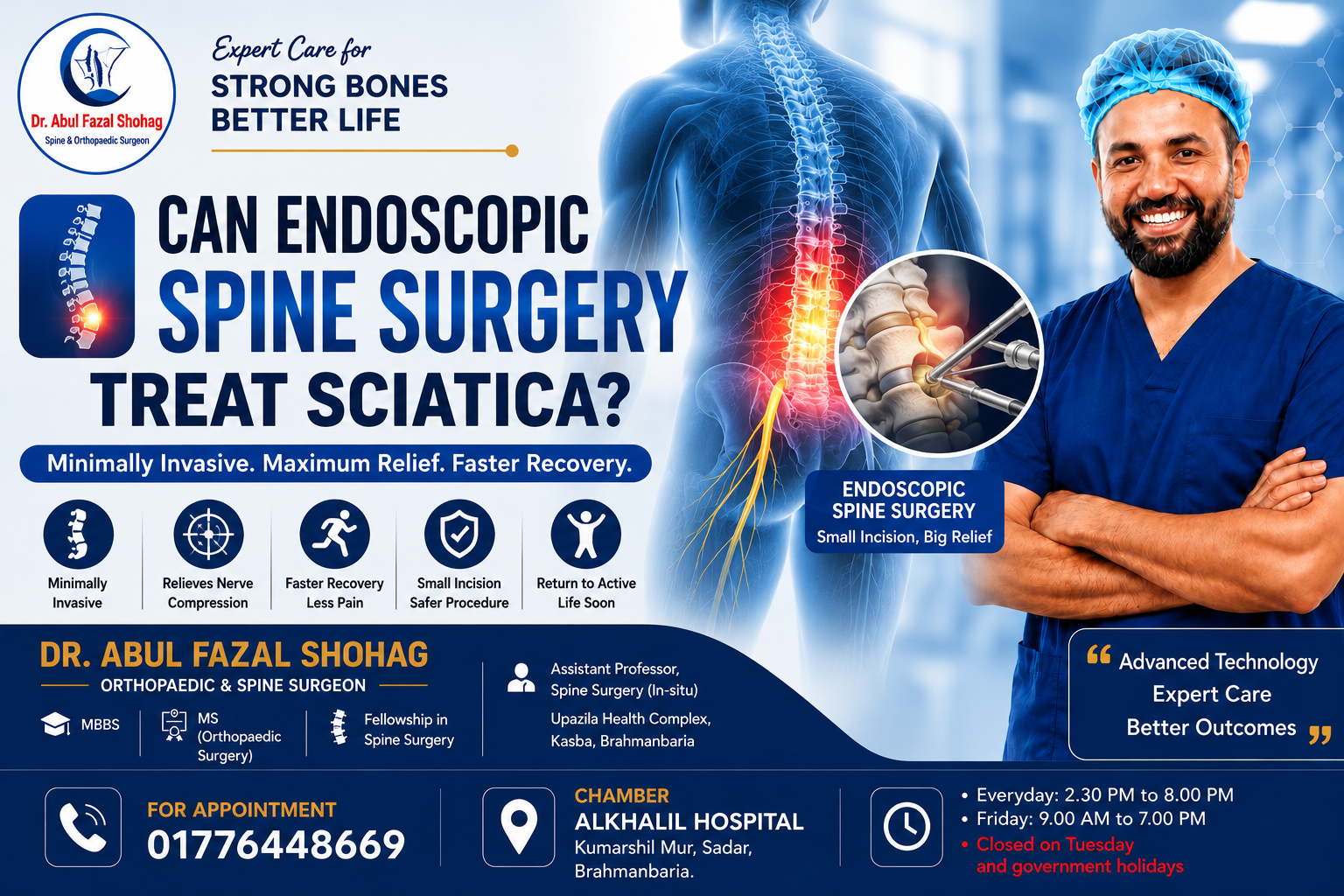
# Can Endoscopic Spine Surgery Treat Sciatica? Everything You Need to Know
Sciatica is one of the most common reasons patients visit a spine surgeon. The sharp pain that starts in the lower back and travels down the leg can make walking, sitting, working, and even sleeping extremely difficult. While many patients improve with medication and physiotherapy, some continue to suffer despite months of conservative treatment.
One of the most advanced treatments available today is Endoscopic Spine Surgery. This minimally invasive procedure allows surgeons to remove the pressure on the affected nerve through a tiny incision, helping patients recover faster with less pain and minimal damage to surrounding muscles.
If you have been diagnosed with a slipped disc (PLID) and are wondering whether endoscopic spine surgery is the right option, this guide will answer your questions.
## What Is Sciatica?
Sciatica is not a disease itself. It is a symptom caused by irritation or compression of the sciatic nerve, the largest nerve in the human body.
The pain usually starts in the lower back or buttock and radiates down the thigh, calf, and sometimes into the foot.
## Common Causes of Sciatica
The most common causes include:
• Lumbar disc prolapse (PLID)
• Lumbar spinal stenosis
• Degenerative disc disease
• Foraminal stenosis
• Spondylolisthesis
• Bone spurs
• Rarely, spinal tumours or infections
Among these, a slipped disc is the most frequent cause.
## Symptoms of Sciatica
Patients may experience:
• Sharp shooting pain down one leg
• Burning sensation
• Electric shock-like pain
• Numbness
• Tingling
• Muscle weakness
• Difficulty standing or walking
• Pain while coughing or sneezing
• Pain that worsens after prolonged sitting
## What Is Endoscopic Spine Surgery?
Endoscopic Spine Surgery is a modern minimally invasive surgical technique performed using a high-definition camera and specialised instruments inserted through a tiny skin incision, usually less than one centimetre.
The surgeon can directly visualise the compressed nerve and remove the herniated disc or other structures causing nerve compression while preserving normal muscles, bones, and ligaments.
## How Does Endoscopic Spine Surgery Relieve Sciatica?
The main goal of surgery is simple—remove the pressure from the compressed nerve.
Once the pressure is relieved:
• Leg pain improves rapidly
• Numbness gradually decreases
• Muscle strength recovers
• Walking becomes easier
• Daily activities become comfortable again
Many patients notice significant relief immediately after surgery.
## Who Is a Good Candidate?
Endoscopic Spine Surgery may be suitable if you have:
• Sciatica lasting more than 6–12 weeks
• MRI-confirmed slipped disc
• Persistent leg pain despite medication
• Failure of physiotherapy
• Progressive muscle weakness
• Recurrent attacks affecting quality of life
• Difficulty walking because of nerve compression
A detailed clinical examination and MRI are necessary before deciding on surgery.
## Advantages of Endoscopic Spine Surgery
Compared with conventional open surgery, endoscopic surgery offers several benefits:
• Tiny skin incision
• Minimal muscle damage
• Less blood loss
• Reduced postoperative pain
• Lower infection risk
• Short hospital stay
• Faster recovery
• Earlier return to work
• Better cosmetic result
These advantages make it an excellent option for selected patients.
## What Happens During the Procedure?
After appropriate anaesthesia, a small incision is made over the affected spinal level.
A thin endoscope with a camera is introduced through the incision.
Specialised instruments are used to remove the herniated disc or compressive tissue while continuously visualising the nerve on a high-definition monitor.
Once the nerve is completely decompressed, the instruments are removed and the small wound is closed.
## Recovery After Endoscopic Spine Surgery
Recovery is generally much faster than conventional spine surgery.
Most patients:
• Walk within a few hours
• Go home the same day or the next day
• Return to office work within 2–4 weeks
• Resume normal daily activities earlier than with traditional surgery
Physiotherapy and rehabilitation play an important role in achieving the best long-term outcome.
## Are There Any Risks?
Like any surgical procedure, endoscopic spine surgery carries some risks, although complications are uncommon in experienced hands.
Possible risks include:
• Infection
• Bleeding
• Dural tear
• Nerve injury
• Recurrent disc prolapse
• Persistent symptoms
Your spine surgeon will explain these risks before surgery.
## Can Sciatica Return After Surgery?
Most patients experience excellent long-term pain relief.
However, recurrence is possible if healthy spinal habits are not maintained.
To reduce the risk:
• Maintain a healthy weight
• Strengthen your core muscles
• Practise good posture
• Avoid heavy lifting
• Exercise regularly
• Stop smoking
## Why Choose Dr Abul Fazal Shohag?
Dr Abul Fazal Shohag is an Orthopaedic and Spine Surgeon with fellowship training in Spine Surgery. He specialises in the diagnosis and treatment of spinal disorders, including slipped discs, spinal stenosis, and sciatica. He offers evidence-based treatment tailored to each patient and performs modern minimally invasive spine procedures, including endoscopic spine surgery, when appropriate.
## Conclusion
Sciatica can severely affect your quality of life, but it does not always require major surgery. For carefully selected patients, Endoscopic Spine Surgery offers an effective, minimally invasive solution with smaller incisions, less pain, faster recovery, and excellent clinical outcomes.
If you have persistent leg pain, numbness, or weakness despite conservative treatment, consult a qualified spine surgeon for a comprehensive evaluation. Early diagnosis and timely treatment can help you return to a pain-free and active life.
## Frequently Asked Questions
Q1. Is endoscopic spine surgery painful?
No. Because the incision is very small and muscle damage is minimal, most patients experience significantly less postoperative pain compared with traditional open spine surgery.
Q2. How long does recovery take after endoscopic spine surgery?
Most patients walk within hours, return home the same day or the following day, and resume office work within 2–4 weeks, depending on their condition.
Q3. Can endoscopic spine surgery permanently cure sciatica?
If sciatica is caused by a compressed nerve due to a slipped disc and the nerve is successfully decompressed, many patients experience long-lasting relief. However, maintaining a healthy lifestyle is important to reduce the risk of recurrence.
Q4. Is endoscopic spine surgery safe?
Yes. When performed by an experienced spine surgeon in appropriately selected patients, endoscopic spine surgery is considered a safe and effective treatment.
Q5. Who should consider endoscopic spine surgery?
Patients with MRI-confirmed nerve compression, persistent leg pain despite conservative treatment, progressive weakness, or significant limitation of daily activities may be suitable candidates.