Bone Health & Osteoporosis: Prevention, Symptoms, Diagnosis and Treatment
Bone Health & Osteoporosis: Prevention, Symptoms, Diagnosis and Treatment
Bone health plays a vital role in maintaining mobility, strength, and independence throughout life. As we age, bones naturally lose density and become weaker. When this bone loss becomes significant, it can lead to osteoporosis—a condition that increases the risk of fractures even after minor falls or injuries.
Osteoporosis is often called the "silent disease" because it usually develops without symptoms until a fracture occurs. Early diagnosis and timely treatment can help prevent serious complications.
What Is Osteoporosis?
Osteoporosis is a condition in which bones become weak, fragile, and more likely to break. It commonly affects the spine, hip, and wrist but can involve any bone in the body.
Who Is at Risk?
Women after menopause
People over 50 years of age
Individuals with a family history of osteoporosis
People with low calcium or vitamin D intake
Smokers
Excessive alcohol consumption
Long-term steroid use
People with low body weight
Individuals with limited physical activity
Common Symptoms
Early osteoporosis usually causes no symptoms.
Back pain
Loss of height
Stooped posture
Fractures after minor falls
Hip fractures
Wrist fractures
Spinal compression fractures
Why Bone Health Matters
Healthy bones reduce the risk of fractures and help maintain mobility, balance, and independence. Good bone health also supports overall physical activity and quality of life.
Diagnosis
Medical history
Physical examination
Bone Mineral Density (DEXA Scan)
Digital X-ray
Blood tests including calcium and vitamin D levels
Additional investigations when required
Treatment Options
Calcium supplementation
Vitamin D supplementation
Prescription medications to improve bone strength
Regular weight-bearing exercise
Balance training
Lifestyle modification
Fall prevention strategies
Surgical treatment for fractures when necessary
How to Prevent Osteoporosis
Eat a calcium-rich diet
Maintain adequate vitamin D levels
Exercise regularly
Walk every day
Perform strength training exercises
Avoid smoking
Limit alcohol intake
Maintain a healthy body weight
Reduce the risk of falls at home
Who Should Be Screened?
Women aged 65 years and older
Men aged 70 years and older
Postmenopausal women with risk factors
Adults with previous fragility fractures
People taking long-term steroid medication
Individuals with chronic diseases affecting bone health
When Should You See an Orthopaedic Surgeon?
Persistent back pain
Sudden loss of height
Fracture after a minor fall
Hip pain after injury
Difficulty walking
Repeated fractures
Why Choose Dr Abul Fazal Shohag?
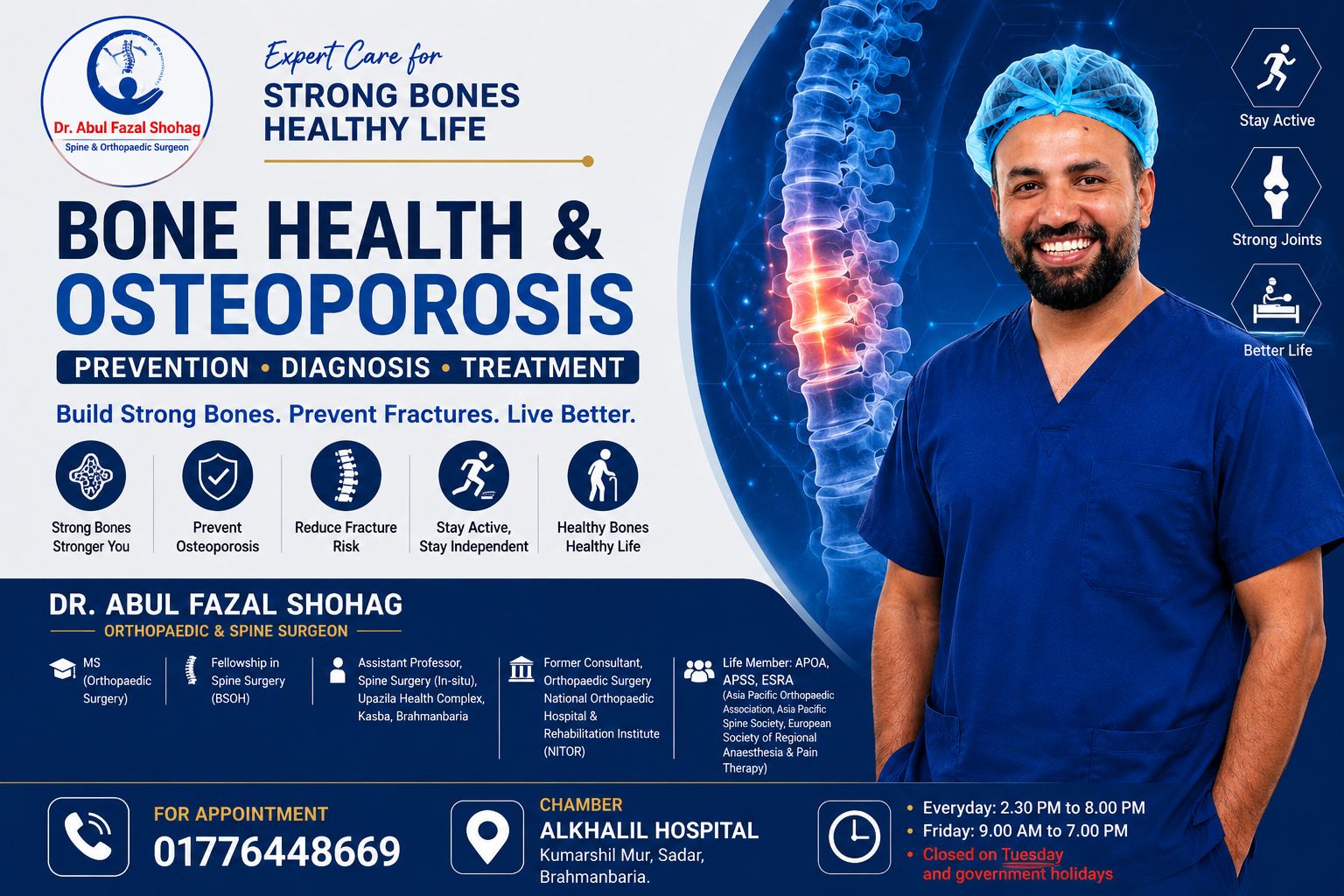
Dr Abul Fazal Shohag is an Orthopaedic and Spine Surgeon experienced in the diagnosis and management of osteoporosis, fragility fractures, spinal disorders, and complex orthopaedic conditions. He provides evidence-based treatment plans focused on preventing fractures, restoring mobility, and improving long-term bone health.
Conclusion
Osteoporosis is preventable and treatable. Early screening, a healthy lifestyle, proper nutrition, and timely medical care can significantly reduce the risk of fractures. If you have risk factors for osteoporosis or have experienced a fracture after a minor injury, consult an orthopaedic specialist for expert evaluation and personalised treatment.