5 Myths About Endoscopic Spine Surgery You Should Stop Believing
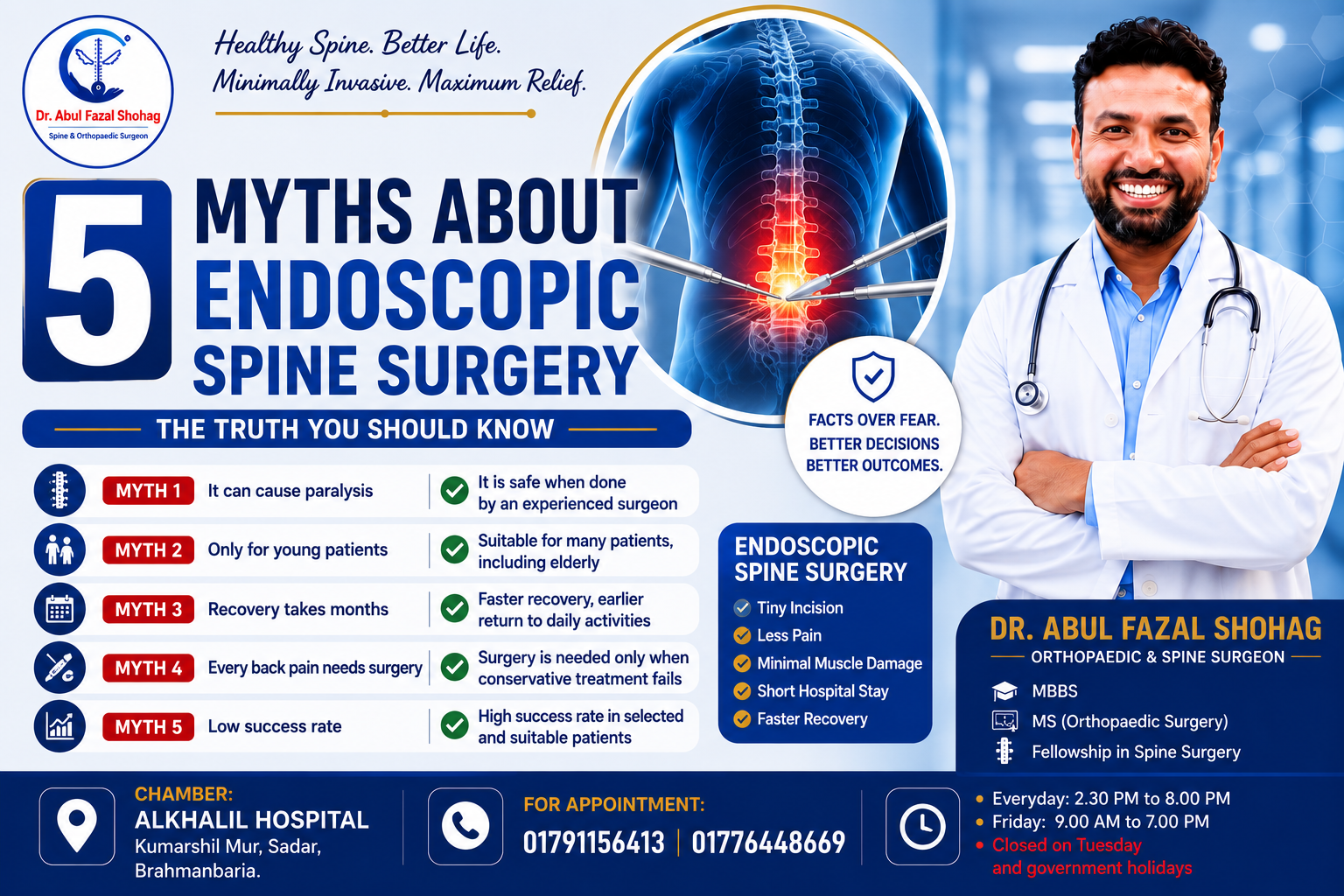
# 5 Myths About Endoscopic Spine Surgery You Should Stop Believing
For many people, the words "spine surgery" immediately create fear. Patients often imagine a large incision, months of bed rest, severe pain, or even paralysis. As a result, many continue to suffer from persistent back pain or sciatica for months or even years because they are afraid of surgery.
Fortunately, spine surgery has advanced significantly over the last decade. Endoscopic Spine Surgery is one of the most modern minimally invasive techniques available today. It allows surgeons to treat selected spinal disorders through a tiny incision while preserving healthy muscles and tissues.
Despite its growing popularity, many misconceptions still exist. In this article, we will separate myths from facts so you can make informed decisions about your spinal health.
## What Is Endoscopic Spine Surgery?
Endoscopic Spine Surgery is a minimally invasive spinal procedure performed using a high-definition camera called an endoscope. Through a skin incision usually less than one centimetre long, specialised instruments are used to remove the structure compressing the spinal nerve.
Because the surrounding muscles and ligaments are preserved, patients generally experience less pain and recover much faster than with traditional open surgery.
## Myth 1: Spine Surgery Always Causes Paralysis
This is one of the biggest fears among patients.
### Fact
Modern spine surgery is extremely safe when performed by an experienced spine surgeon in carefully selected patients. Advanced imaging, specialised instruments, and high-definition visualisation have greatly improved surgical precision.
Although every operation carries some risk, paralysis after routine endoscopic spine surgery is extremely uncommon.
## Myth 2: Endoscopic Spine Surgery Is Only for Young Patients
Many people believe older adults cannot undergo endoscopic surgery.
### Fact
Age alone is not the deciding factor.
Many elderly patients benefit from Endoscopic Spine Surgery because the procedure causes less tissue damage, less blood loss, and faster recovery. Overall health, medical condition, MRI findings, and the specific spinal problem are much more important than age.
## Myth 3: Recovery Takes Several Months
People often think they will remain in bed for months after surgery.
### Fact
One of the greatest advantages of Endoscopic Spine Surgery is rapid recovery.
Most patients:
• Walk within a few hours
• Go home the same day or the following day
• Resume light daily activities within a few days
• Return to office work within two to four weeks, depending on their occupation
Following your surgeon's rehabilitation programme helps achieve the best outcome.
## Myth 4: Every Patient with Back Pain Needs Surgery
Back pain is extremely common, but surgery is not the answer for everyone.
### Fact
Most patients improve with:
• Medication
• Physiotherapy
• Lifestyle modification
• Weight management
• Exercise
• Posture correction
Surgery is recommended only when conservative treatment fails or when there is significant nerve compression causing severe pain, weakness, or loss of function.
## Myth 5: Endoscopic Spine Surgery Has a Low Success Rate
Some people believe minimally invasive surgery is less effective than open surgery.
### Fact
For appropriately selected patients, Endoscopic Spine Surgery has excellent success rates comparable to conventional surgery. It effectively relieves nerve compression while reducing muscle injury and postoperative discomfort.
Proper patient selection is the key to achieving excellent outcomes.
## Conditions That Can Be Treated with Endoscopic Spine Surgery
This technique is commonly used for:
• Lumbar disc prolapse (PLID)
• Sciatica
• Lumbar spinal stenosis
• Foraminal stenosis
• Selected cervical disc prolapse
• Certain recurrent disc herniations
Not every spinal condition is suitable for endoscopic treatment. Your spine surgeon will determine the most appropriate procedure after clinical evaluation and MRI review.
## Advantages of Endoscopic Spine Surgery
Compared with conventional surgery, Endoscopic Spine Surgery offers several benefits:
• Tiny incision
• Minimal muscle injury
• Less blood loss
• Reduced postoperative pain
• Lower infection risk
• Faster recovery
• Short hospital stay
• Earlier return to work
• Smaller scar
These advantages make it an attractive option for many patients.
## Is Endoscopic Spine Surgery Right for You?
You may be a suitable candidate if you have:
• Persistent leg pain due to a slipped disc
• MRI-confirmed nerve compression
• Failure of medication and physiotherapy
• Progressive weakness
• Difficulty walking because of sciatica
• Symptoms affecting your quality of life
A detailed consultation and MRI evaluation are essential before deciding on surgery.
## Why Choose Dr Abul Fazal Shohag?
Dr Abul Fazal Shohag is an Orthopaedic and Spine Surgeon with Fellowship training in Spine Surgery. He specialises in the diagnosis and treatment of spinal disorders, including slipped discs, sciatica, spinal stenosis, and minimally invasive spine procedures. Every patient receives an individualised treatment plan based on clinical findings, imaging, and international evidence-based guidelines.
## Conclusion
Fear should never prevent you from receiving the right treatment. Most of the myths surrounding spine surgery are based on outdated information. Modern Endoscopic Spine Surgery has transformed the treatment of many spinal disorders by providing smaller incisions, less pain, quicker recovery, and excellent outcomes in carefully selected patients.
If you have persistent back pain, sciatica, or numbness that is not improving with conservative treatment, consult a qualified spine surgeon. Early diagnosis and appropriate treatment can help you return to an active, pain-free life.
## Frequently Asked Questions
### Q1. Is Endoscopic Spine Surgery safe?
Yes. When performed by an experienced spine surgeon in carefully selected patients, Endoscopic Spine Surgery is considered a safe and effective procedure with a low complication rate.
### Q2. Will I need general anaesthesia?
Many endoscopic spine procedures can be performed under general or regional anaesthesia, depending on the patient's condition and the surgical technique used.
### Q3. How long does the surgery take?
Most endoscopic spine procedures take approximately 45 to 90 minutes, depending on the complexity of the case.
### Q4. Can I walk after surgery?
Yes. Most patients are encouraged to walk within a few hours after surgery, which helps speed recovery.
### Q5. Will my slipped disc come back after surgery?
Most patients enjoy long-term relief. However, recurrence is possible, so maintaining a healthy weight, strengthening your core muscles, practising good posture, and following your surgeon's advice can reduce the risk.