10 Early Warning Signs of Osteoporosis You Should Never Ignore
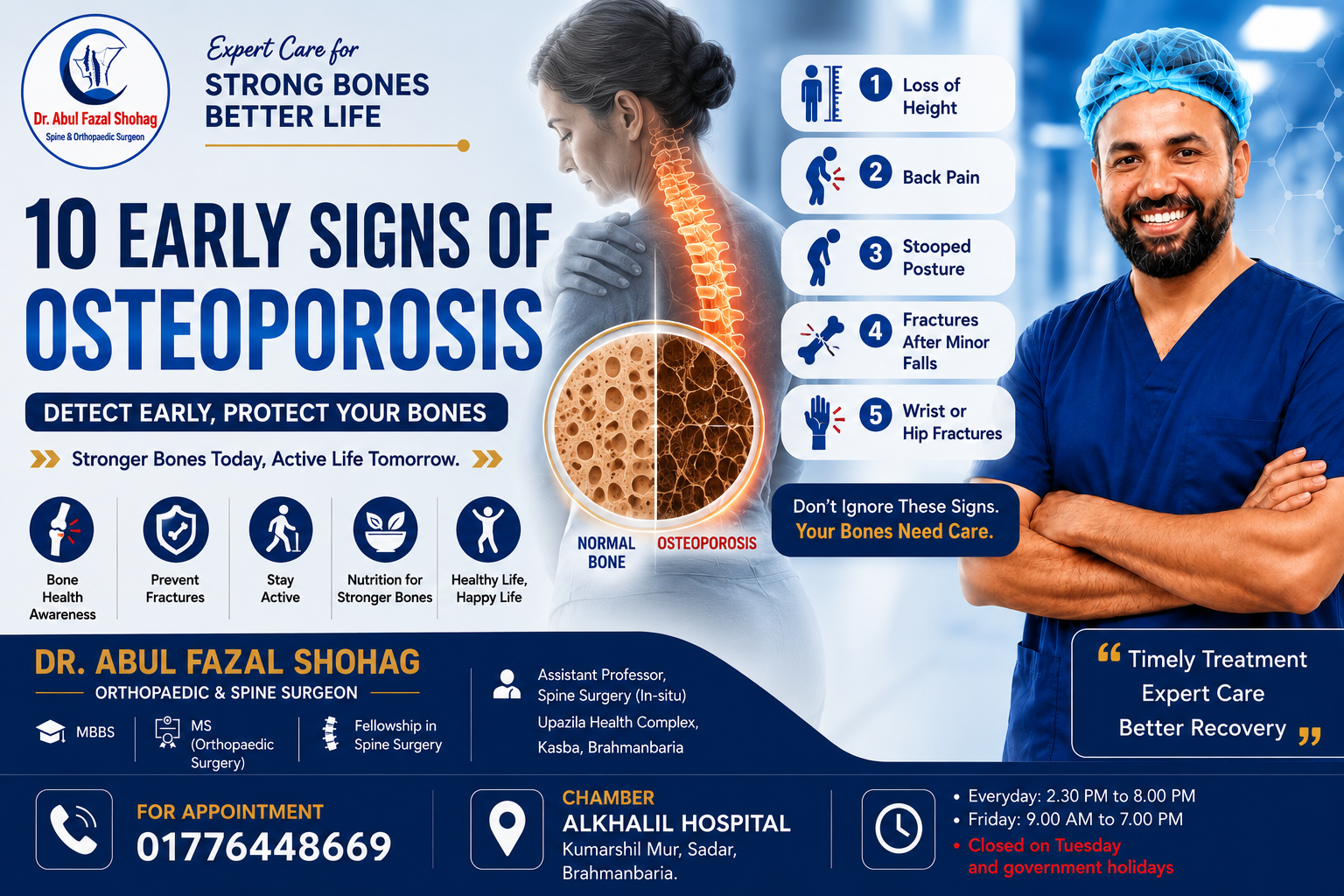
# 10 Early Warning Signs of Osteoporosis You Should Never Ignore
Osteoporosis is one of the most common bone diseases worldwide, affecting millions of people every year. It develops slowly over time, making bones thin, weak, and fragile. Because it often causes no symptoms until a fracture occurs, osteoporosis is commonly known as the "silent disease."
Many people only discover they have osteoporosis after breaking a bone following a minor fall or even while performing everyday activities. The good news is that osteoporosis can often be prevented, diagnosed early, and treated successfully. Recognising the warning signs can help you seek treatment before a serious fracture occurs.
## What Is Osteoporosis?
Osteoporosis is a condition in which bone mineral density decreases and the internal structure of the bone becomes porous. Healthy bones are continuously renewed, but with increasing age, especially after menopause, bone loss occurs faster than new bone formation.
As bones become weaker, they break more easily. The spine, hip, wrist, and shoulder are the most commonly affected bones.
## Why Is Osteoporosis Called the Silent Disease?
Unlike arthritis or muscle injuries, osteoporosis usually develops without pain or obvious symptoms. Bone loss may continue for years before the first fracture occurs. This is why regular screening is important, especially for people with risk factors.
## 10 Early Warning Signs of Osteoporosis
### 1. Loss of Height
Gradual loss of height may indicate compression fractures of the spine caused by weakened vertebrae.
### 2. Persistent Back Pain
Long-standing back pain without a clear injury may be caused by tiny fractures in the spinal bones.
### 3. Stooped Posture
A rounded upper back or "dowager's hump" often develops because weakened vertebrae collapse over time.
### 4. Fractures After a Minor Fall
Breaking a bone after a simple slip or fall is one of the strongest warning signs of osteoporosis.
### 5. Weak Grip Strength
Reduced muscle strength and weaker bones often occur together, increasing the risk of falls and fractures.
### 6. Frequent Wrist Fractures
A wrist fracture after a minor injury may be the first sign that your bones have become fragile.
### 7. Hip Pain After Minor Trauma
Hip fractures are among the most serious complications of osteoporosis and may occur after a simple fall.
### 8. Family History of Osteoporosis
If your parents or siblings have osteoporosis or have suffered hip fractures, your own risk is significantly higher.
### 9. Reduced Mobility
Difficulty walking or moving after a minor injury may suggest weakened bones or an undiagnosed fracture.
### 10. Recurrent Fragility Fractures
Multiple fractures over several years strongly suggest underlying osteoporosis and require urgent evaluation.
## Who Is at Risk?
You are more likely to develop osteoporosis if you:
• Are a woman after menopause
• Are over 65 years of age
• Have a family history of osteoporosis
• Have low calcium or vitamin D intake
• Smoke cigarettes
• Consume excessive alcohol
• Have a low body weight
• Take steroid medications for a long time
• Lead a physically inactive lifestyle
• Have rheumatoid arthritis or certain hormonal disorders
## How Is Osteoporosis Diagnosed?
Your orthopaedic surgeon may recommend:
• Detailed medical history
• Physical examination
• Bone Mineral Density (DEXA Scan)
• X-rays if fractures are suspected
• Blood tests to assess calcium, vitamin D, thyroid function, and other possible causes of bone loss
The DEXA scan is the gold standard for diagnosing osteoporosis and assessing fracture risk.
## Treatment Options
Treatment depends on the severity of bone loss and your overall fracture risk.
It may include:
• Calcium supplementation
• Vitamin D supplementation
• Prescription medications to strengthen bones
• Weight-bearing and resistance exercises
• Physiotherapy
• Lifestyle modifications
• Fall prevention strategies
• Surgical treatment if fractures occur
## Foods That Help Strengthen Bones
A healthy diet is essential for maintaining strong bones.
Include:
• Milk and dairy products
• Yogurt and cheese
• Small fish eaten with bones
• Eggs
• Green leafy vegetables
• Soy products
• Beans
• Almonds
• Vitamin D-rich foods
## How Can Osteoporosis Be Prevented?
Most cases of osteoporosis can be prevented by adopting healthy lifestyle habits.
• Exercise regularly
• Walk for at least 30 minutes daily
• Perform muscle-strengthening exercises
• Eat a calcium-rich diet
• Maintain adequate vitamin D levels
• Avoid smoking
• Limit alcohol intake
• Maintain a healthy body weight
• Prevent falls at home
• Get a bone density test if you are at risk
## When Should You See an Orthopaedic Surgeon?
Consult an orthopaedic surgeon if you:
• Develop persistent back pain
• Lose height noticeably
• Experience fractures after minor injuries
• Have repeated fractures
• Have a family history of osteoporosis
• Are postmenopausal with multiple risk factors
• Take long-term steroid medications
Early diagnosis can prevent serious hip and spine fractures and help preserve your independence.
## Why Choose Dr Abul Fazal Shohag?
Dr Abul Fazal Shohag is an Orthopaedic and Spine Surgeon with expertise in diagnosing and managing osteoporosis, fragility fractures, and spinal disorders. He offers evidence-based treatment plans tailored to each patient's needs, focusing on fracture prevention, improved bone health, and long-term mobility.
## Conclusion
Osteoporosis is a silent disease, but its consequences can be devastating. Fortunately, early diagnosis, regular exercise, a nutritious diet, and appropriate medical treatment can significantly reduce the risk of fractures.
If you are over 50 years of age, have risk factors, or have experienced a fracture after a minor fall, consult an orthopaedic surgeon for a comprehensive bone health assessment. Taking action today can help you maintain strong bones and an active lifestyle for years to come.
## Frequently Asked Questions
Q1. What are the first signs of osteoporosis?
The earliest signs may include loss of height, persistent back pain, stooped posture, or fractures after a minor fall. Many people have no symptoms until a fracture occurs.
Q2. Who should have a DEXA scan?
Women aged 65 years and older, postmenopausal women with risk factors, men over 70 years, long-term steroid users, and people with fragility fractures should discuss a DEXA scan with their doctor.
Q3. Can osteoporosis be prevented?
Yes. Regular exercise, adequate calcium and vitamin D intake, maintaining a healthy weight, avoiding smoking, limiting alcohol, and regular screening can greatly reduce the risk.
Q4. What foods are good for osteoporosis?
Milk, yogurt, cheese, small fish, eggs, green leafy vegetables, soy products, beans, almonds, and vitamin D-rich foods help maintain strong bones.
Q5. Is osteoporosis treatable?
Yes. Although lost bone cannot always be fully restored, modern medications, healthy lifestyle changes, physiotherapy, and proper nutrition can slow bone loss, strengthen bones, and significantly reduce the risk of fractures.